
Conditions we treat
Mobility and balance problems
Finding stairs harder, feeling unsteady on uneven ground or holding back from going out are worth taking seriously. Balance and strength respond to training at any age, and small changes often protect your independence for years.
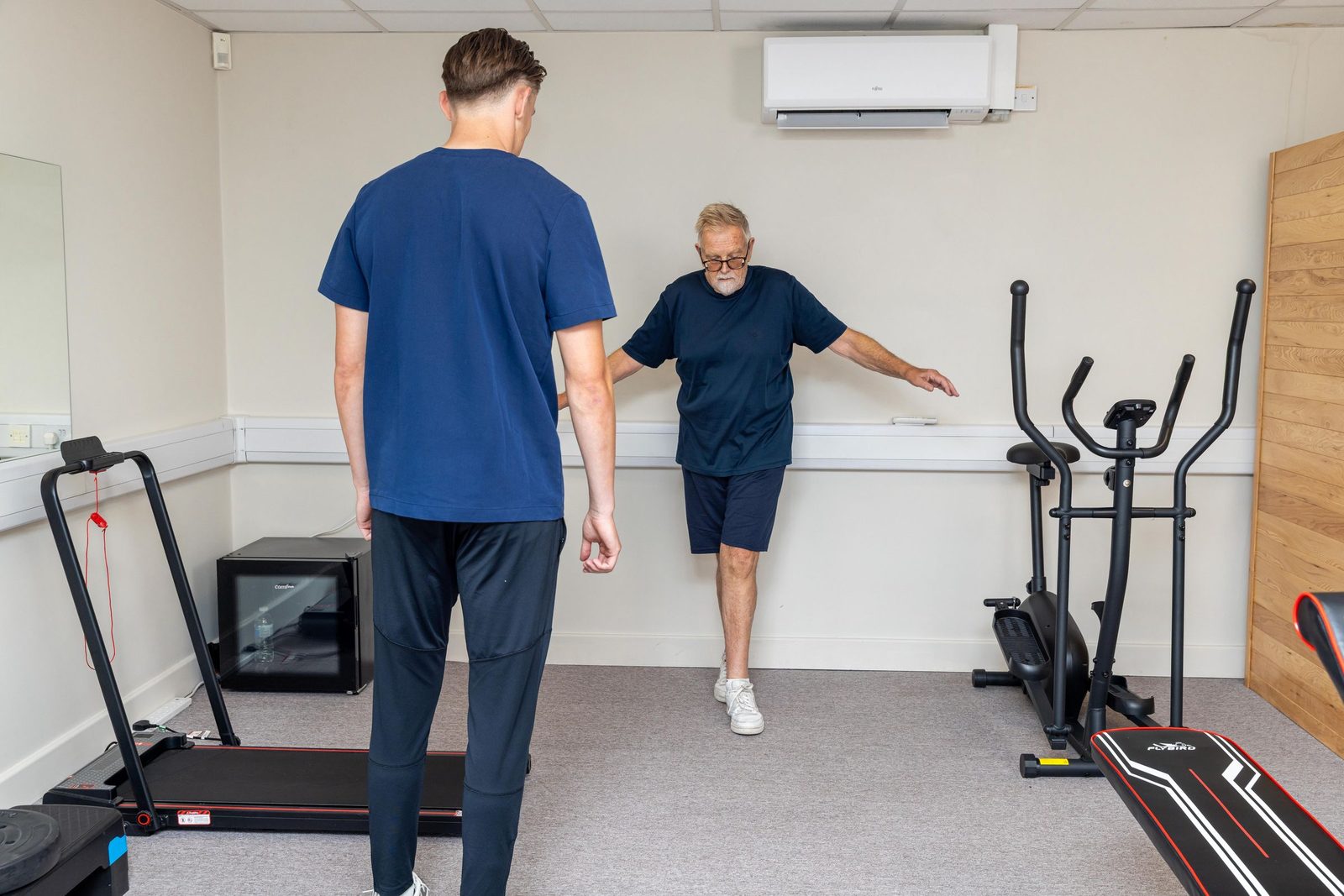
What it is
Understanding mobility and balance problems.
Balance relies on three systems: your inner ear, your eyes, and sensors in your joints and feet. Your brain combines them and your muscles make the corrections. Unsteadiness usually comes from a gradual decline in more than one, rather than a single cause.
Common contributors include muscle loss, which speeds up from the sixties if not trained, stiff or painful joints, a weaker leg after injury or surgery, reduced sensation in the feet, changes in vision, inner ear problems and some medicines. Several often overlap.
Feeling unsteady leads to walking less, which costs more strength and balance and makes you less steady again. People stop going out, avoid the beach or garden and lose confidence. Falls are a leading cause of lost independence in later life, and strength and balance training is one of the few things shown to reduce the risk.
What people notice
- Feeling unsteady on uneven ground, in the dark or in crowds
- Difficulty on stairs, kerbs and slopes, or needing the handrail
- Struggling to get out of a low chair or up from the floor
- Slower walking, shorter distances or needing more rests
- Near misses, stumbles or one or more falls in the past year
- Reaching for furniture and walls to steady yourself indoors
- Avoiding going out, or worrying about falling when you do
How we help
What treatment actually involves.
We measure where you are now, testing strength, joint movement, walking and balance in ways we can repeat later so you can see your progress. We also ask about your home, your week and the situations that feel risky, so the plan fits your life.
If pain or stiffness is holding you back, we treat that too. Often it is discomfort rather than balance that made someone stop moving, and easing it opens the door to everything else.
The core is progressive strength and balance training: leg and hip strength, rising from a chair, stepping, turning and practising what feels unsafe, such as stairs, kerbs and standing on one leg to put trousers on. We work in the rehab gym and you continue at home. Progress usually comes within weeks, and it needs keeping up.
We also cover walking aids, footwear, hazards at home and how to get up safely after a fall. If your GP, an optician or an inner ear specialist should be involved, we will say so.
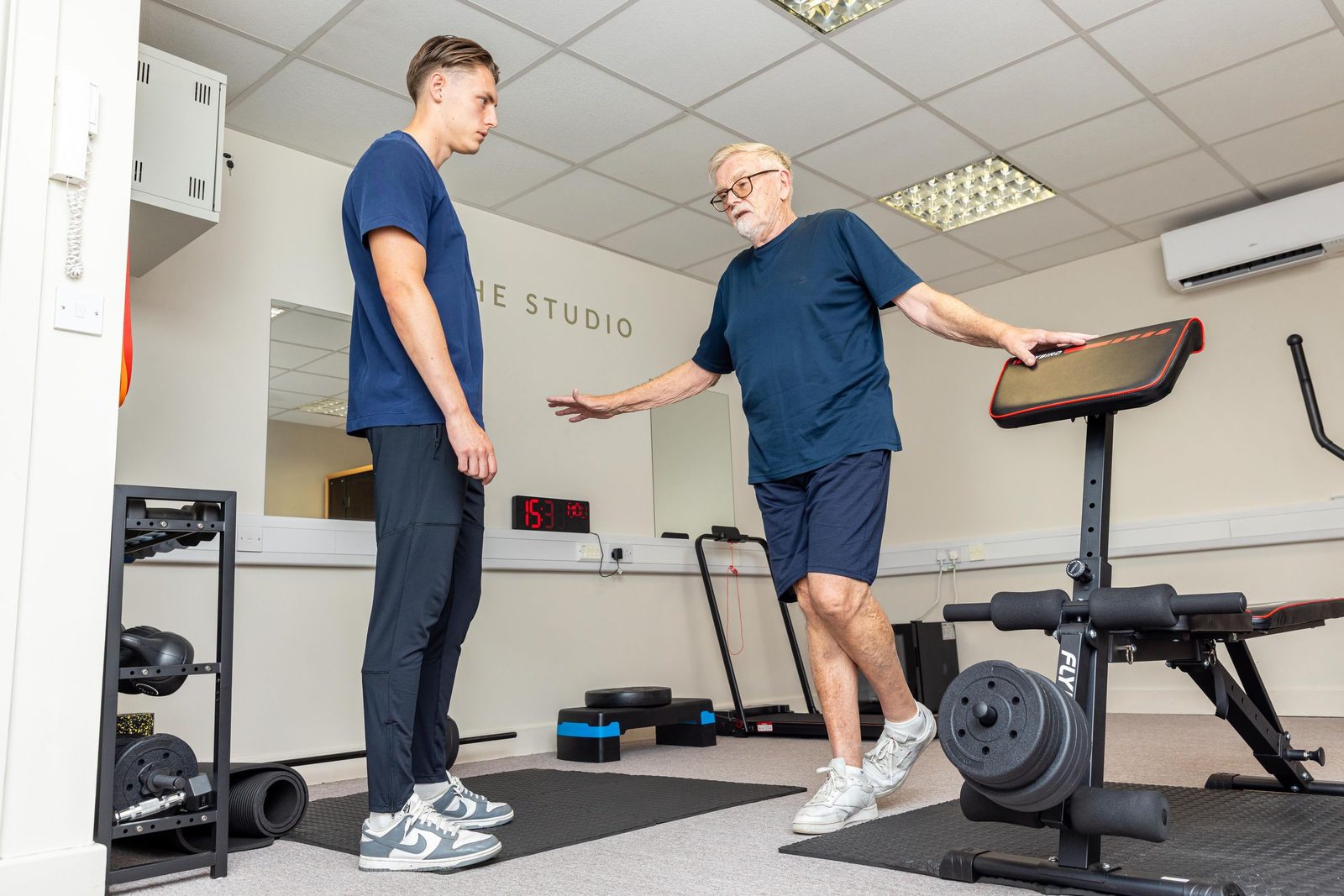
Your first visit
What to expect.
- Your first appointment is 30 minutes, with time for proper strength and balance testing
- We watch how you walk, stand and get out of a chair, and record measurements to compare against later
- You get an explanation of what is affecting your balance and what can realistically change
- Wear comfortable clothes and the shoes you usually walk in, and bring a list of your medication
FAQs
Common questions.
Is it too late to improve my balance at my age?
No. Strength and balance improve with training into the eighties and nineties. The gains need to be kept up, but age itself is not the barrier people assume.
I have not actually fallen. Is it worth coming in?
Yes, and earlier is better. Near misses, relying on the handrail and avoiding certain situations are early signals, and acting then is far more effective than waiting for a fall.
Will you make me use a walking stick?
We will not push anything on you. An aid is sometimes useful while strength is rebuilt and sometimes not needed at all. We will explain the pros and cons and leave the decision with you.
How long before I notice a difference?
Most people notice a difference within a few weeks, often getting out of a chair or on stairs. Gains last only while the training continues, so we build a routine you can sustain.
Related
People with this often ask about these too.
Ready when you are.
Call or WhatsApp us on 01702 965 509 and we will find a time that suits you.