
Conditions we treat
Knee ligament and meniscus injuries
Knee injuries can make you wary of stairs, slopes and uneven ground. Whether you have torn a meniscus, sprained a ligament or are waiting on a scan, a clear assessment and proper rehabilitation usually make a real difference.
What it is
Understanding knee ligament and meniscus injuries.
Four main ligaments hold the knee steady: the cruciates inside the joint and the collaterals at the sides. Two menisci, crescents of tough cartilage, spread load between the thigh and shin bones. More than one structure is often injured at once.
In sport, these injuries follow a twist, a hard landing or a tackle. Away from sport, it can be turning awkwardly out of the car or twisting while kneeling in the garden. From around 40, the menisci become less pliable, so a tear can happen with very little force.
Many meniscal tears from mid-life onwards are degenerative and often show up on scans of knees that have never hurt. Good evidence shows structured rehabilitation works as well as keyhole surgery for most of them. A full cruciate rupture in an active knee, or a tear that blocks the joint, does need a surgical opinion, and we will help you work out which situation you are in.
What people notice
- Pain at the side of the knee or deep inside the joint
- Swelling, either straight after the injury or building over a day or two
- A feeling that the knee gives way, especially on turning or on stairs
- Clicking, catching or a sense that something is in the way
- Difficulty fully straightening or fully bending the knee
- Pain when twisting, squatting or getting up from a low chair
- Loss of confidence on slopes, steps and uneven ground
How we help
What treatment actually involves.
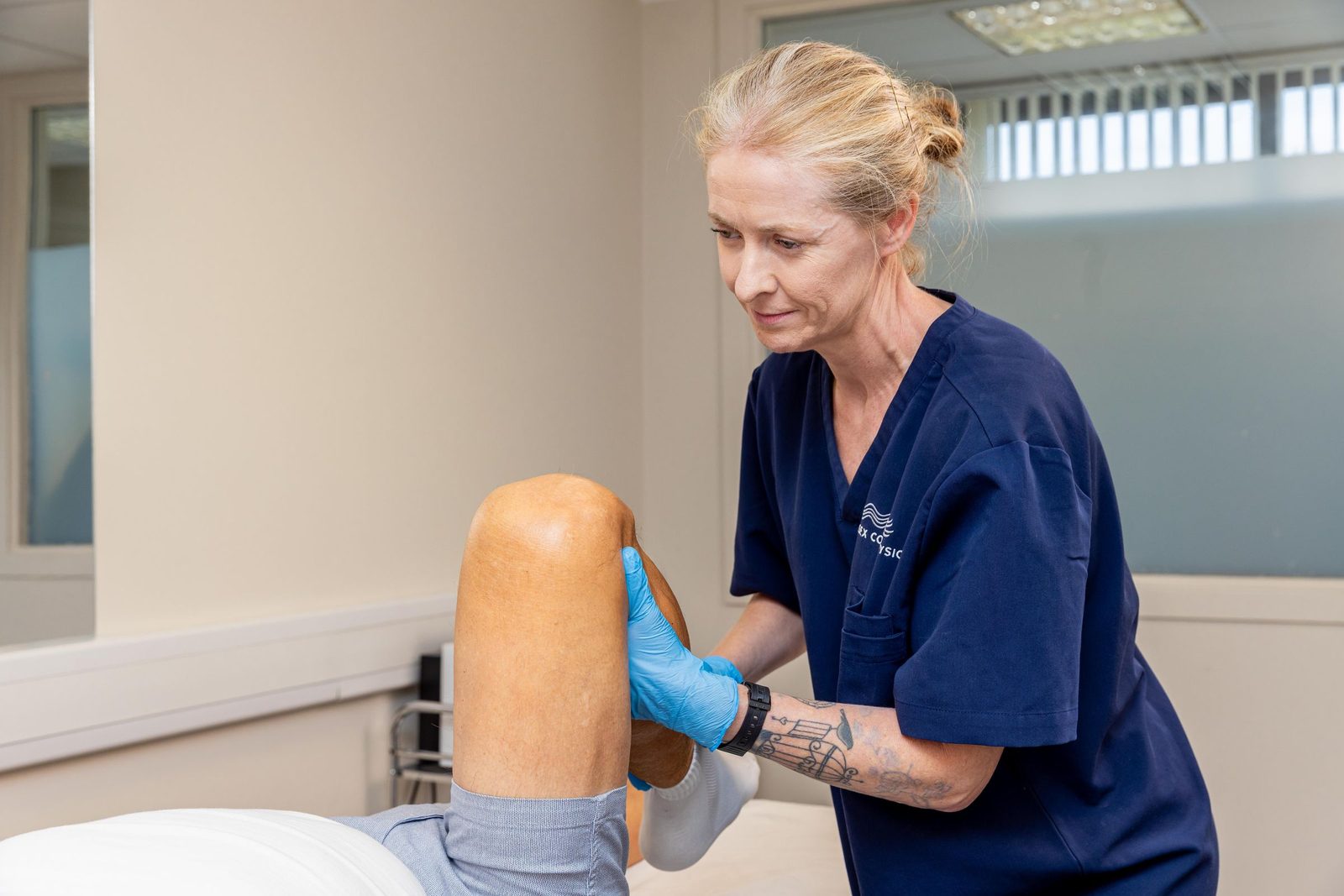
We start with how the injury happened and what it is stopping you doing, then examine the ligaments and menisci and look at your hip, ankle and walking. Ultrasound at the clinic can show the ligaments at the sides of the knee and any swelling, though not the structures deep inside, so we will tell you if an MRI or consultant opinion is the better next step.
Early treatment settles pain and swelling, restores bending and straightening, and gets the surrounding muscles working. Hands-on treatment, taping or a brace can help in the first few weeks, alongside the rehabilitation.
The main work is graded strengthening of the quadriceps, hamstrings, glutes and calf, built up in our rehab gym and continued at home. We progress to what you actually need, whether that is stairs, kerbs, getting down to the floor, walking on the seafront or returning to golf, tennis or bowls.
If you are waiting for a scan or surgery, the time is not wasted. A strong, mobile knee makes recovery from an operation easier, and some people improve enough that surgery is no longer needed.
Your first visit
What to expect.
- Your first appointment is 30 minutes, with a thorough examination of the knee, or 60 minutes with a Platinum session if the injury is complex
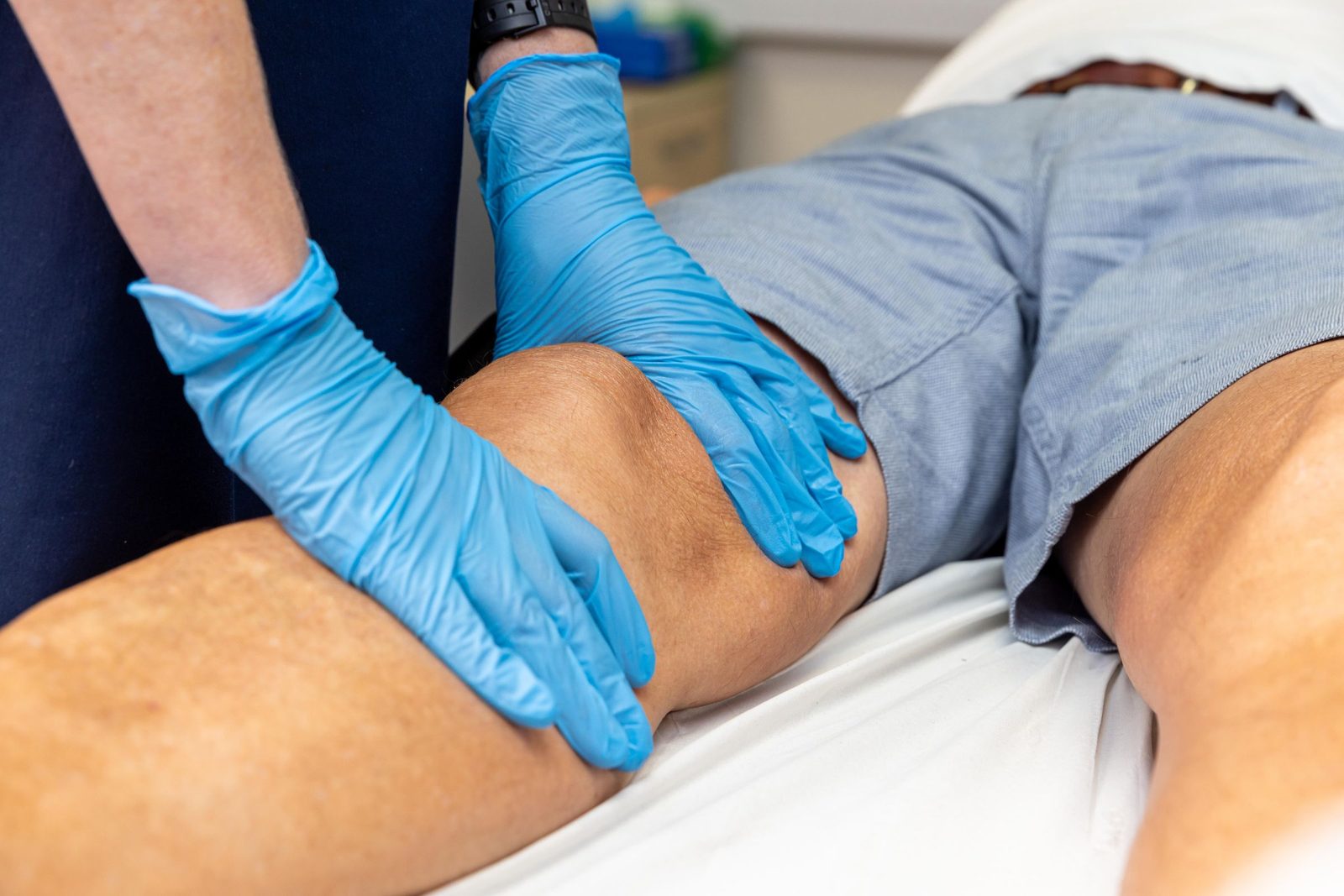
- We take a full history, test the knee and explain what we think is going on in plain language
- You leave with a clear plan, the first exercises and a realistic idea of what recovery involves
- Wear or bring shorts or loose trousers, and bring any scan reports or hospital letters you have
FAQs
Common questions.
Do I need a scan before I come in?
No. A careful examination is often enough to start treatment safely. If imaging would change what we do, we will help you arrange it through your GP or privately.
Will I need an operation?
Often not. Many meniscal tears and partial sprains do well with rehabilitation. Surgery is usually reserved for a knee that locks, a cruciate rupture in someone who needs that stability, or a knee that has not responded to proper treatment.
How long will it take to get better?
It depends on which structure is injured and how badly. Rather than quote a fixed number of weeks, we will set out the stages of recovery and review progress as we go.
I am in my sixties. Is strength work safe for my knee?
Yes, and it is usually the most valuable thing you can do. Loading a knee sensibly does not wear it out, and stronger legs mean better joint support, steadier balance and more independence.
Related
People with this often ask about these too.
Ready when you are.
Call or WhatsApp us on 01702 965 509 and we will find a time that suits you.