
Conditions we treat
Physiotherapy for neck pain and stiffness
Neck pain is common, usually settles and is rarely serious. It can still make driving, sleeping and checking over your shoulder miserable, and it responds well to the right assessment and a clear plan.
What it is
Understanding neck pain.
Most neck pain comes from irritated joints, discs and muscles. It can follow an awkward night, a long drive, time at a desk or decorating, or have no obvious trigger. The neck tightens to protect itself, which makes turning your head harder.
Scan reports often mention degeneration or spondylosis. These age-related changes sound alarming but are found in most people over 50, including many with no neck pain at all.
Sometimes an irritated nerve sends pain, pins and needles or numbness into the shoulder, arm or hand, known as cervical radiculopathy. It can be sharp and unsettling, but most cases improve within weeks to a few months without surgery. Neck problems can also cause headaches at the base of the skull.
What people notice
- Stiffness and difficulty turning your head, particularly when reversing the car
- A deep ache across the top of the shoulders and between the shoulder blades
- Headaches starting at the base of the skull and spreading forwards
- Pain that is worse after sleeping awkwardly or after a long spell at a screen
- Pins and needles, numbness or pain running into the arm or hand
- A feeling of weakness or heaviness in one arm
- Broken sleep because you cannot find a comfortable position
How we help
What treatment actually involves.
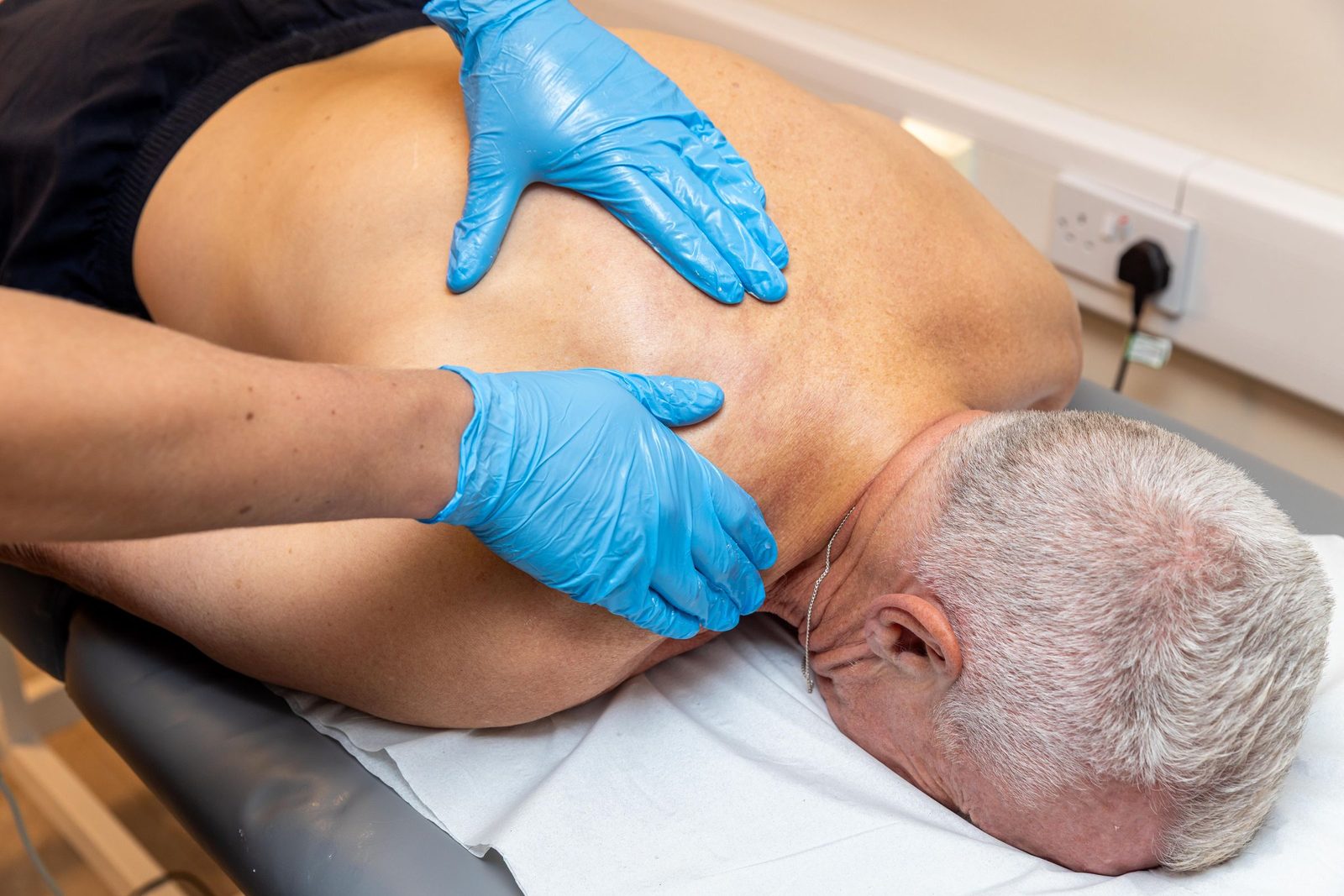
First we work out where the pain is coming from and rule out the few causes that need medical rather than physiotherapy care. We assess neck movement, check strength, reflexes and sensation if there is arm pain, and look at your mid back and shoulders, which usually play a part.
Early treatment settles the irritation and restores movement through hands-on joint and soft tissue work, mobility exercises, advice on sleep and pillows, and changes to whatever is aggravating it, from a laptop at the kitchen table to a long commute.
Once the neck is calmer, we build strength and endurance through the neck, shoulder blades and upper back. This is what stops the pain coming back, and we take you through it in the rehab space so you know exactly what to do at home.
If a nerve is involved, we explain the likely course and what to watch for. Most people improve steadily. If you do not, or a scan, medication review or specialist opinion would help, we will help you arrange it.
Your first visit
What to expect.
- Your first appointment is 30 minutes, or 60 minutes with a Platinum session if you want more time to go through the whole history
- A full assessment of neck movement, strength and, where relevant, nerve function in the arm
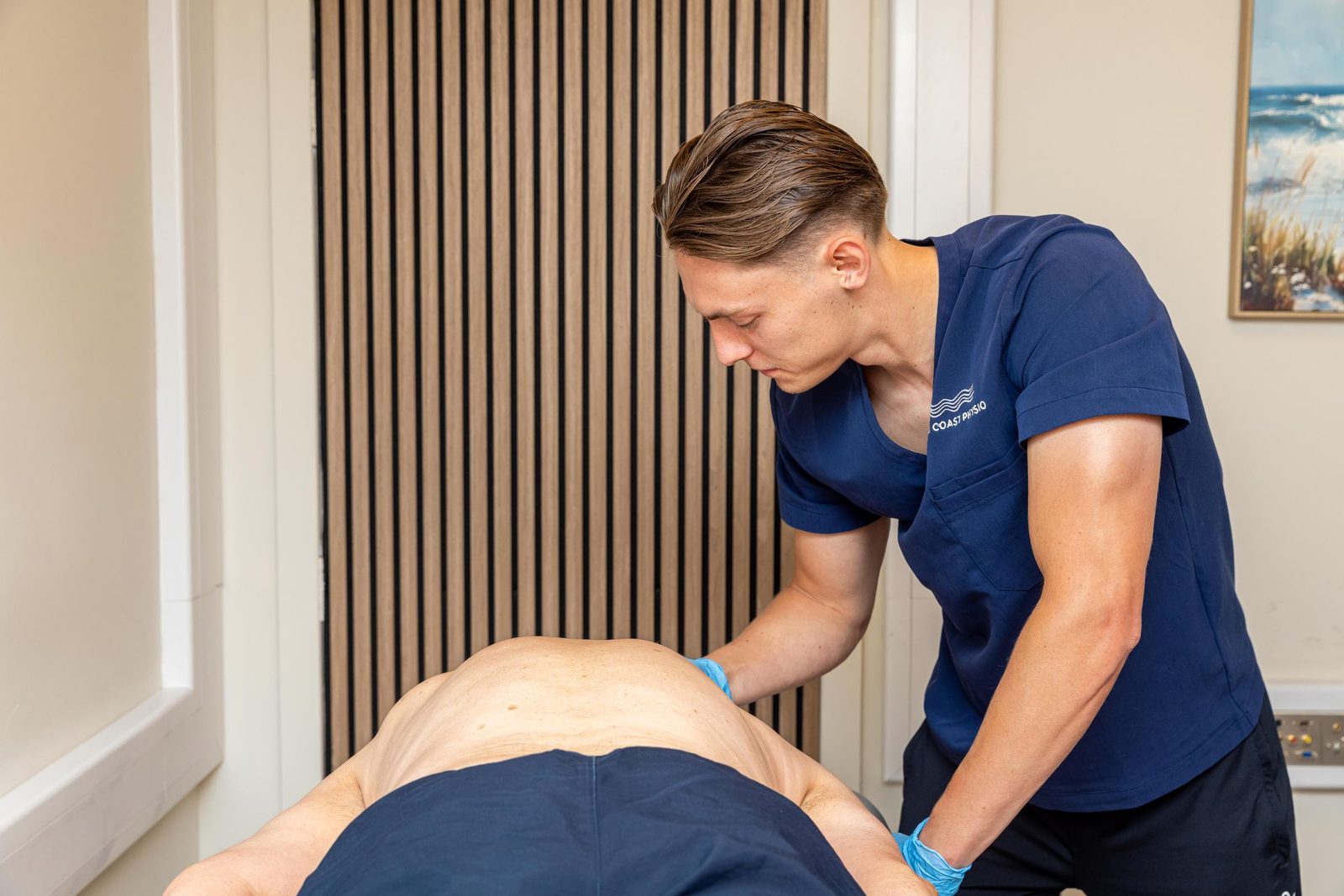
- Hands-on treatment where it is appropriate, plus two or three exercises to start with rather than a long list
- A clear explanation of what is going on, what to avoid for now, and what should improve first
FAQs
Common questions.
Should I rest my neck or keep moving it?
Keep it moving, gently and within comfort. Collars and prolonged rest tend to make a stiff neck stiffer. That does not mean pushing into sharp pain, just normal activity and regular gentle movement, building up as it settles.
Is it my posture?
Less than people expect. There is no single correct posture, and how long you hold a position matters more than the position itself. Moving regularly beats sitting perfectly.
The pain goes into my arm. Is that a trapped nerve, and is it serious?
It may well be an irritated nerve root. It can be very painful, especially at night, but it is usually not dangerous and most settle without surgery. We will check for warning signs such as worsening weakness or clumsiness at your assessment.
How long will it take to get better?
Straightforward neck pain often improves within a few weeks, though nerve-related arm pain takes longer. Nobody can honestly guarantee a date, but we will give you a realistic range after your assessment and review it as we go.
Related
People with this often ask about these too.
Ready when you are.
Call or WhatsApp us on 01702 965 509 and we will find a time that suits you.