
Conditions we treat
Rotator cuff injuries and shoulder impingement
Most shoulder pain that hurts when you reach up, out or behind you comes from the rotator cuff. It usually responds well to the right loading programme, and surgery is needed far less often than people expect.
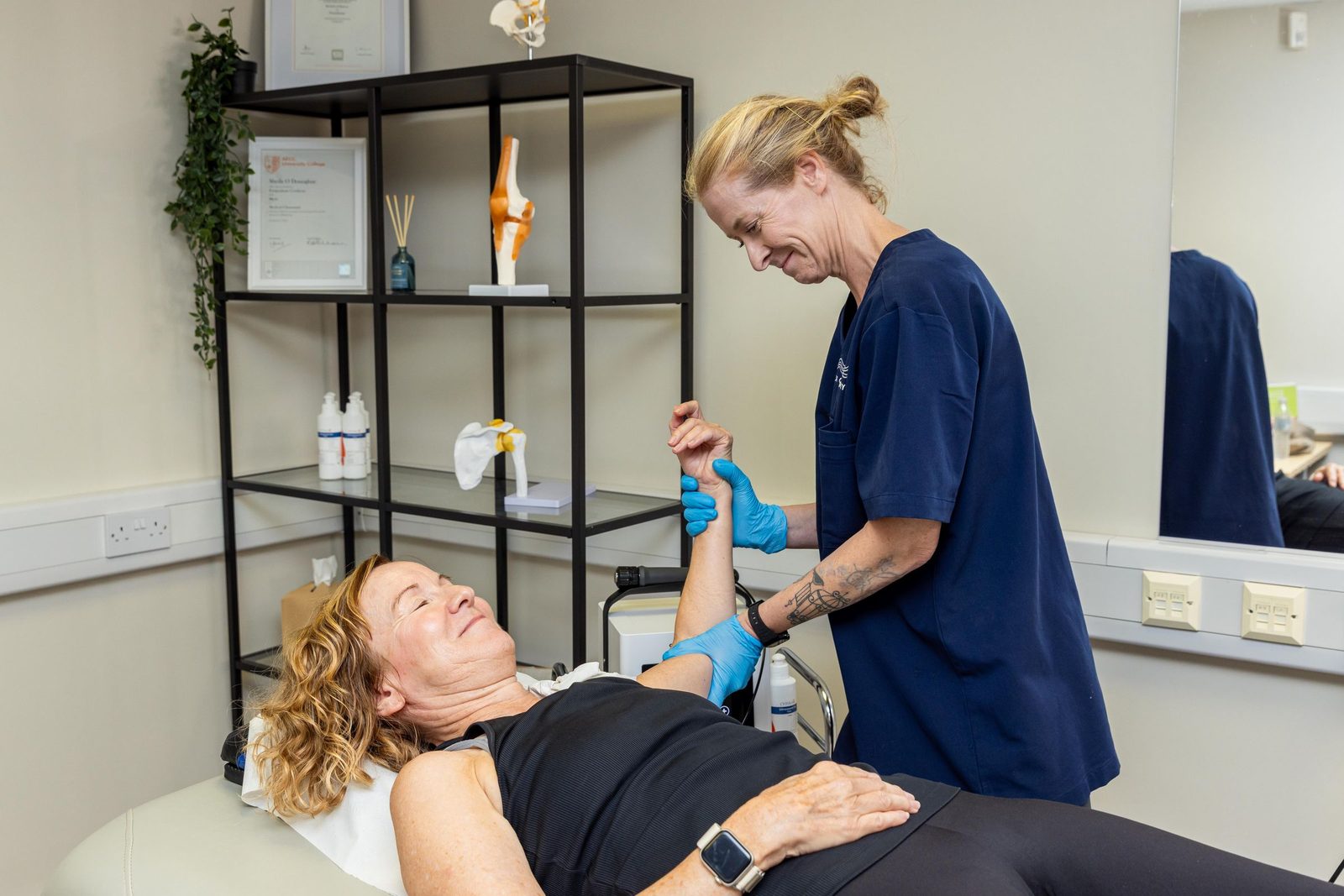
What it is
Understanding rotator cuff and shoulder impingement.
The rotator cuff is four muscles and their tendons that keep the ball of the shoulder centred in its socket. When a tendon is overloaded or irritated, it hurts, especially when reaching or lifting overhead.
Impingement, bursitis and tendinopathy all describe a similar picture: an irritated cuff tendon and the fluid-filled sac beside it. Impingement suggested something was being pinched and needed surgery. Current thinking is that the tendon is irritated by load, and building its capacity is the treatment.
Rotator cuff tears are common from middle age, often developing quietly over years, and many people have them without pain. A tear on a scan does not automatically mean surgery. A traumatic tear, where a fall or wrench leaves you unable to lift the arm, needs prompt assessment.
What people notice
- Pain on the outside of the upper arm, often halfway down towards the elbow
- A painful arc when lifting the arm out to the side, easing again at the top
- Difficulty reaching up to a shelf, into a cupboard or out to a seatbelt
- Pain when lying on that shoulder at night
- Weakness or a dead arm feeling when holding something out in front of you
- Catching or clicking with certain movements
- Aching afterwards following decorating, gardening or carrying shopping
How we help
What treatment actually involves.
We assess the whole shoulder: each cuff muscle, how the shoulder blade moves, and your neck, which can refer pain to the same area. Then we find the movements and loads that reproduce your pain.
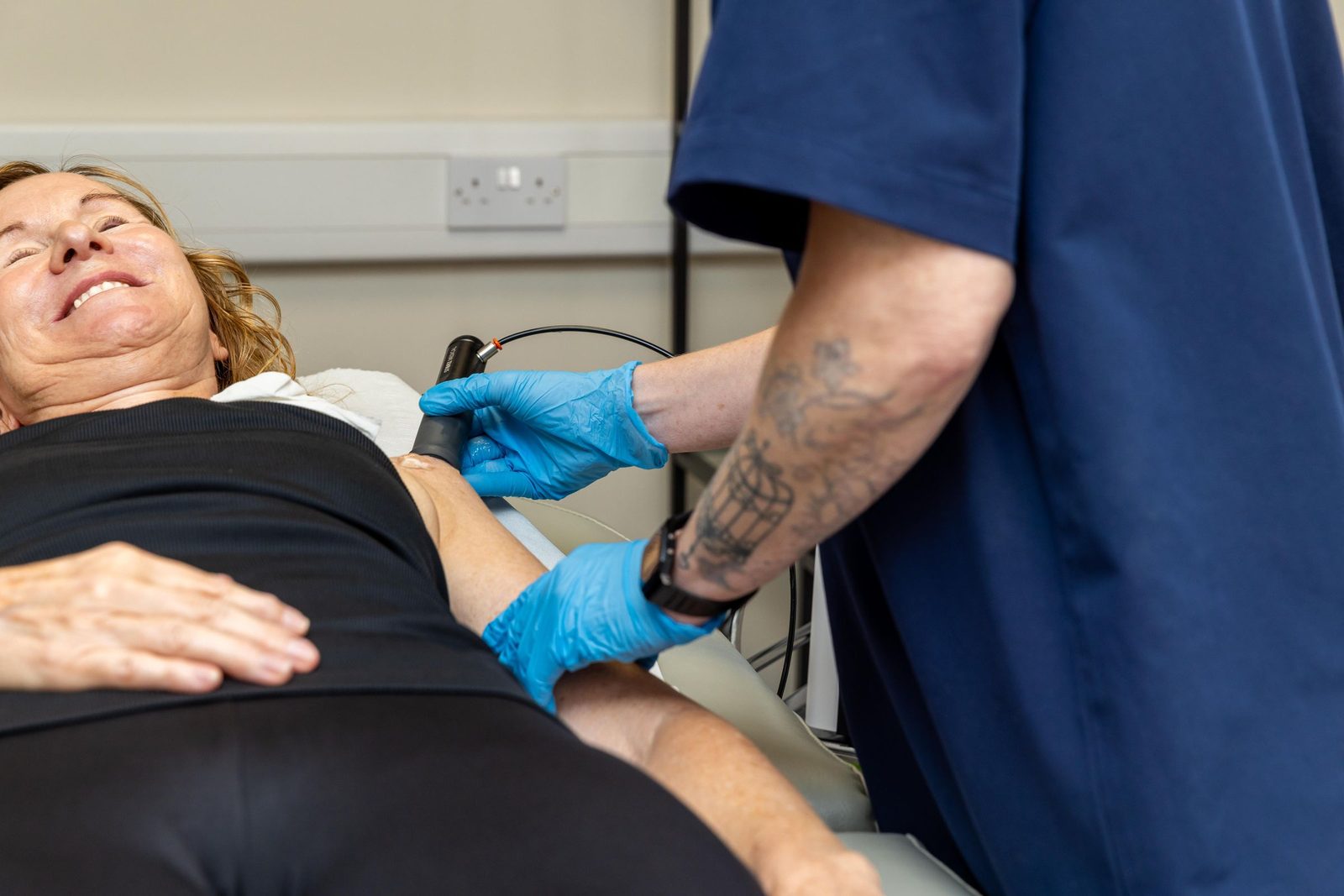
If the diagnosis is unclear, diagnostic ultrasound at the clinic lets us watch the cuff tendons and bursa as you move, which helps tell an irritated tendon from a torn one.
The main treatment is a progressive strengthening programme for the cuff and shoulder blade muscles, built up over weeks. Hands-on treatment can ease pain early on, and we will adjust the everyday activities winding it up. For stubborn tendon pain, shockwave therapy is available here.
Results depend on doing the programme consistently, so we keep it realistic. If your shoulder does not respond, or a tear needs a surgical opinion, we will refer you on.
Your first visit
What to expect.
- Your first appointment is 30 minutes, covering the shoulder, shoulder blade and neck
- Specific testing to work out which structure is causing the pain, rather than a general look
- A clear explanation of what impingement, bursitis or tendinopathy actually mean for you
- A starting exercise programme at a level your shoulder can tolerate, plus advice for sleeping and daily tasks
FAQs
Common questions.
I have been told I have a rotator cuff tear. Do I need an operation?
Often not. Degenerative tears are very common with age, and many people regain full, comfortable use after good rehabilitation. Surgery is considered more for large traumatic tears, particularly in younger people, or when physiotherapy has not worked.
Should I rest it until the pain goes?
Complete rest usually backfires, as the tendon loses capacity and the pain returns as soon as you use it again. Instead, we reduce the specific aggravating loads while loading the tendon in a controlled way.
How long before I notice a difference?
Many people notice less pain within a few weeks, but tendons adapt slowly, and meaningful strength gains take a few months of consistent work.
Why does my shoulder hurt most at night?
Night pain is very common with cuff problems, because lying down changes the pressure around the tendon. We will show you sleeping positions that help. If night pain is severe and unrelenting, tell us, as it can change what we recommend.
Related
People with this often ask about these too.
Ready when you are.
Call or WhatsApp us on 01702 965 509 and we will find a time that suits you.