
Conditions we treat
Frozen shoulder: getting movement and sleep back
Frozen shoulder is painful, slow and wearing, particularly at night. It does improve, but it takes time, and knowing which stage you are in decides what treatment will help now.
What it is
Understanding frozen shoulder.
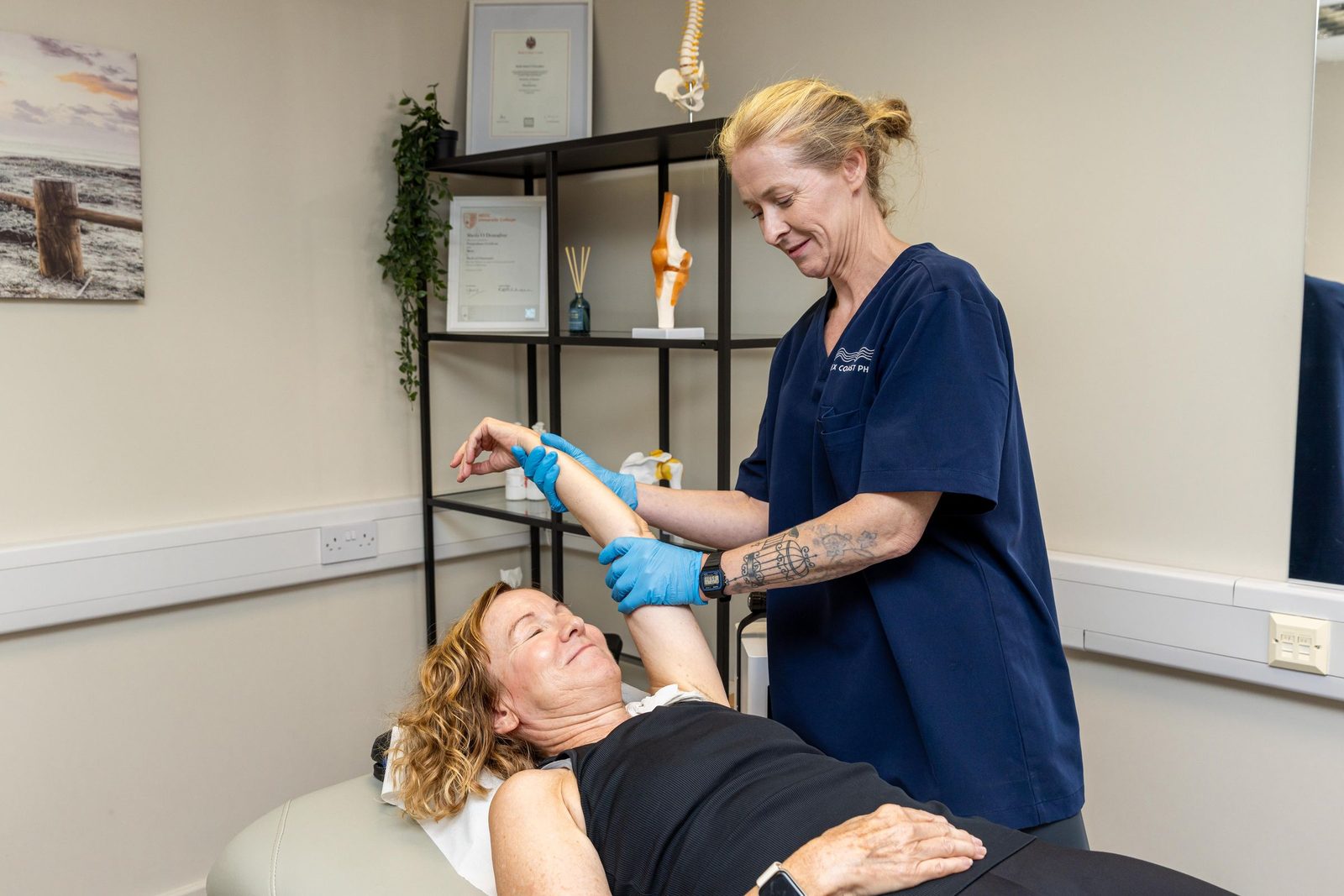
Frozen shoulder (adhesive capsulitis) is when the capsule around the shoulder joint becomes inflamed, then thickens and tightens. The shoulder hurts a great deal and then becomes genuinely stiff, whether you move it or someone else does.
It usually comes on for no obvious reason, though it can follow a period of rest after injury or surgery. It is most common between 40 and 65, more common with diabetes or thyroid conditions, and can later affect the other shoulder.
It moves through three phases: painful, when night pain is at its worst; stiff, when pain eases but movement is restricted; and thawing, when movement gradually returns. The whole course often takes more than a year and varies a great deal between people.
What people notice
- Deep, severe shoulder pain, often felt down the outside of the upper arm
- Night pain that wakes you and makes lying on that side impossible
- Losing the ability to reach behind your back, to a back pocket or to a bra strap
- Difficulty reaching overhead, into a cupboard or into a seatbelt
- The shoulder feeling stuck rather than weak
- Struggling with dressing, washing hair and drying your back
- The arm feeling stiff even when someone else moves it for you
How we help
What treatment actually involves.
First, an accurate diagnosis. Frozen shoulder is often confused with rotator cuff problems or arthritis. The pattern of restriction tells us a lot, and diagnostic ultrasound at the clinic can help rule out other causes.
In the painful phase, the aim is comfort and sleep rather than forcing movement: gentle movement within tolerance, hands-on treatment, positioning at night, and pain relief options to discuss with your GP. Pushing hard at this stage makes things worse.
As stiffness takes over, treatment shifts to stretching, hands-on joint work and progressive loading, so you regain range rather than simply waiting. We also strengthen the shoulder blade and arm muscles, which weaken during the painful months.
No treatment reliably shortcuts frozen shoulder. Good physiotherapy reduces pain along the way, protects the movement you have and speeds up recovery once the shoulder is ready. If a steroid injection or specialist opinion would help, we will say so.
Your first visit
What to expect.
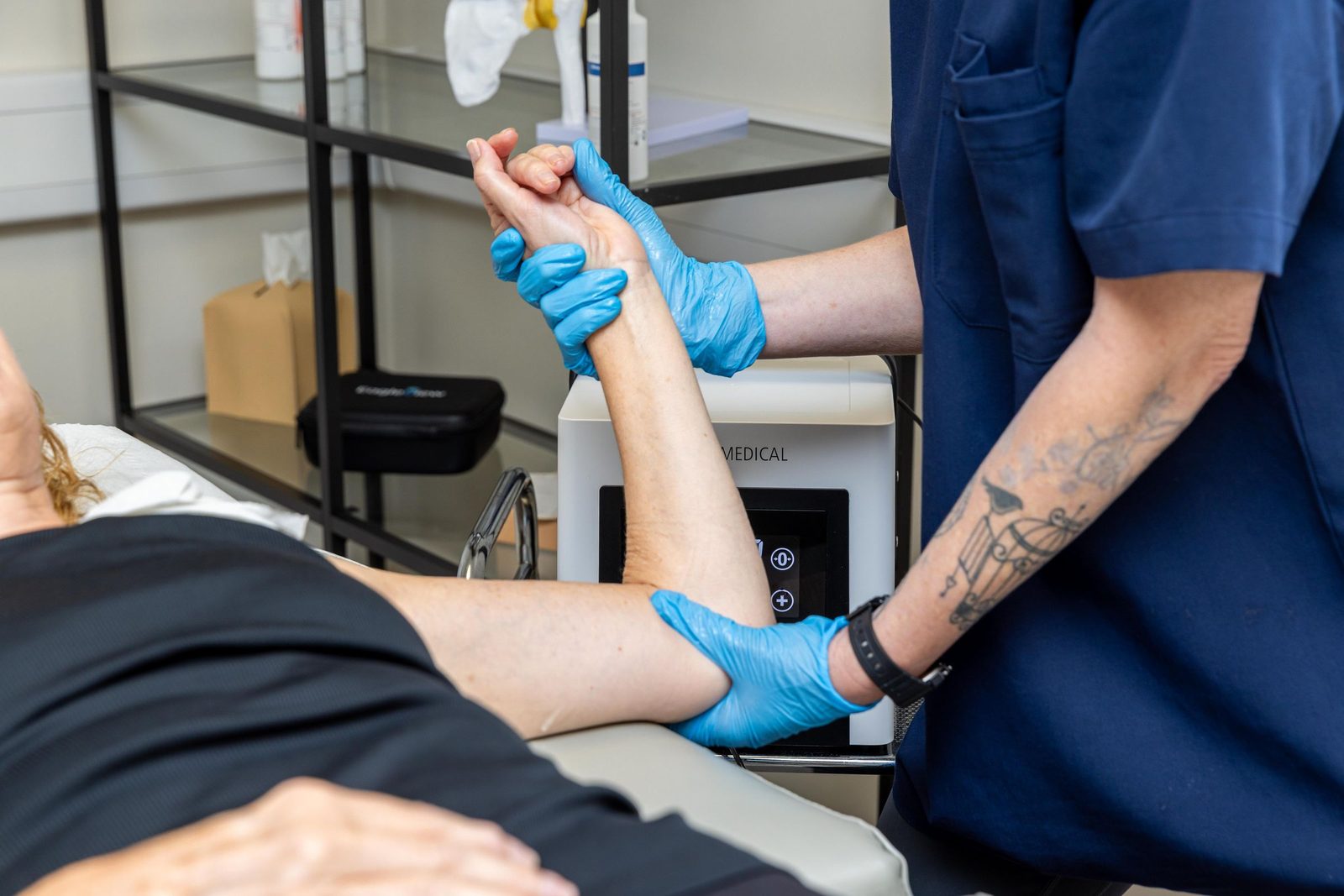
- Your first appointment is 30 minutes, with a full assessment of both shoulders and your neck
- A clear explanation of which phase you are in and what that means for treatment right now
- Hands-on treatment where appropriate, and practical advice for sleeping and daily tasks
- A short home programme pitched at the right level, not a list of stretches that flare it up
FAQs
Common questions.
How long does frozen shoulder last?
It varies. Many people deal with it for well over a year. We cannot promise a timescale, but we can tell you which stage you are in and what should change next.
Should I be pushing through the pain to stretch it?
Not in the painful phase. Aggressive stretching early on tends to increase pain and night waking without improving the end result.
Once the shoulder reaches the stiffer, less painful phase, firmer stretching and loading help a lot. Getting that timing right is a key reason to be assessed.
Will I need an injection or surgery?
Most people do not. A steroid injection can help some people in the painful phase, particularly with sleep. Surgery is only considered for the small minority who remain severely restricted after a long period of good treatment.
Will it happen in the other shoulder too?
It can, though usually not at the same time. If the same deep ache and loss of reach start on the other side, get it looked at early.
Related
People with this often ask about these too.
Ready when you are.
Call or WhatsApp us on 01702 965 509 and we will find a time that suits you.