
Conditions we treat
Rehabilitation before and after knee or hip replacement
A new hip or knee gives you a better joint. Rehabilitation turns it into walking further, sleeping better and managing stairs without thinking, and that work carries on well past the first six weeks.
What it is
Understanding knee and hip replacement rehab.
A hip or knee replacement swaps the worn joint surfaces for an artificial joint. It is a well-established operation, and the pain relief is often dramatic.
Surgery does not restore strength. Years of walking less and avoiding stairs leave the muscles around the hip, thigh and calf weaker, and rebuilding them, along with balance and confidence, takes months.
Rehabilitation has three stages: preparation before surgery (prehabilitation); the early weeks afterwards, focused on movement, swelling and safe walking; and from around six weeks, building real strength and function. That third stage is the one people most often cut short, and it decides how much you get back.
What people notice
- Stiffness in the new joint, particularly first thing in the morning
- Swelling around the knee that comes and goes with activity
- Weakness in the thigh or buttock, making stairs and chairs hard work
- A limp that has not gone away, or reliance on a stick longer than expected
- Feeling unsteady on uneven ground or nervous about falling
- Aching after walking further than usual, easing with rest
- Not yet being back to the activities you had the surgery for
How we help
What treatment actually involves.
If your operation is ahead of you, building leg strength and practising how you will manage stairs, chairs and the bathroom makes early recovery smoother. Start several weeks before the date if you can.
After surgery, we pick up where the hospital programme leaves off: restoring movement, managing swelling, normalising your walking and weaning off aids at the right pace, always within your surgeon’s precautions.
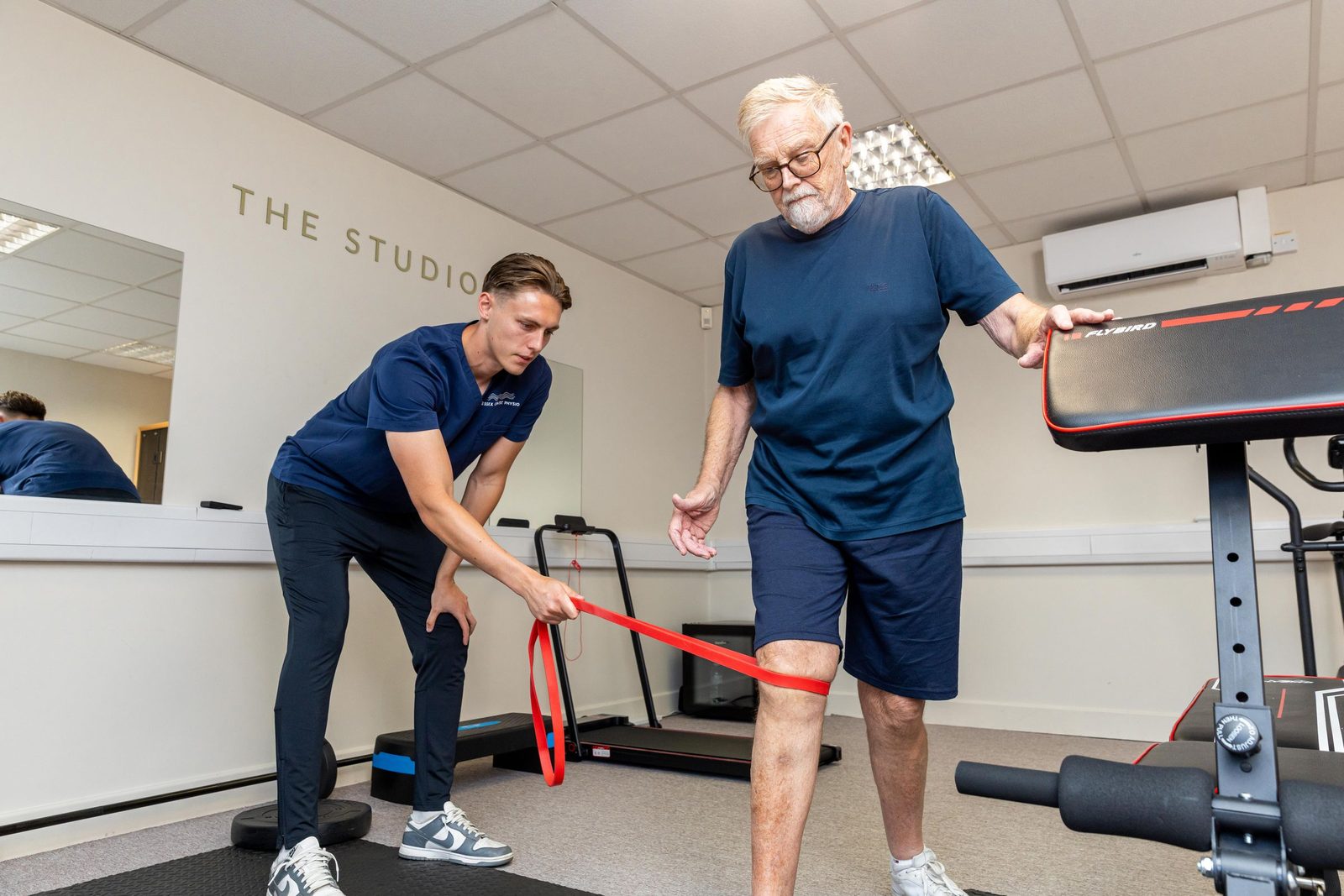
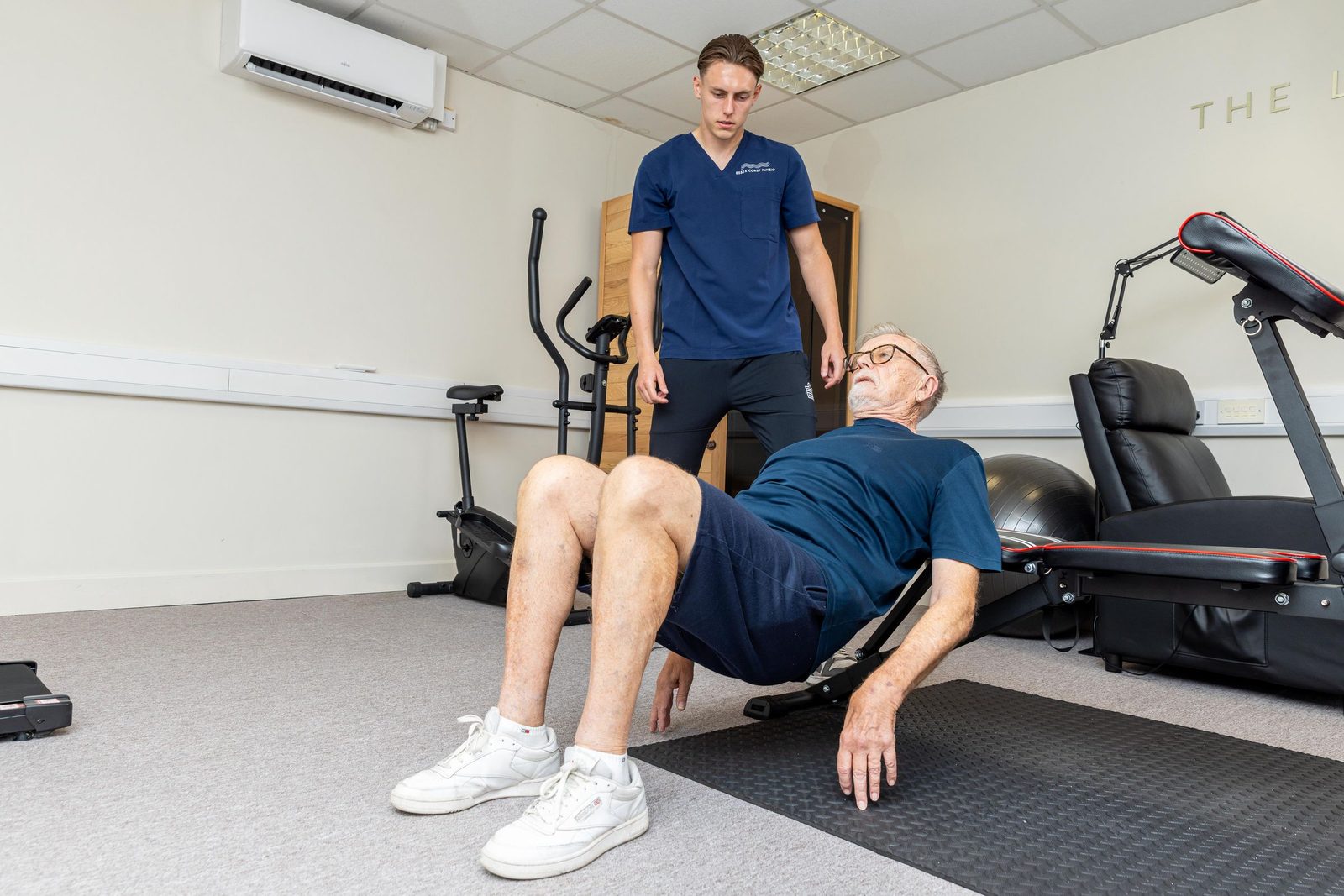
From around six weeks, the work becomes progressive in our rehab gym: strength for the hip, thigh and calf, stairs, balance and single leg control, building towards the walks, garden or golf you had the operation for.
Hips often feel good relatively quickly. Knees are slower and can stay swollen and stiff for months, which is normal. Full recovery commonly takes six to twelve months, and people who keep up the strength work tend to be most pleased with the result.
Your first visit
What to expect.
- Your first appointment is 30 minutes, whether you are preparing for surgery or recovering from it
- We ask about your operation, your surgeon’s instructions and any precautions before anything else
- Assessment of movement, swelling, strength, walking and balance, with measurements to track progress against
- A staged plan with clear goals, and an honest view of where you are compared with where you should be
FAQs
Common questions.
I already had physiotherapy at the hospital. Do I need more?
Hospital programmes get you safely mobile in the early weeks, but they are rarely designed to rebuild the strength lost before surgery. If you are still limping, avoiding stairs or not back to what you wanted, there is usually a lot to gain.
Is it too late to start if my operation was months or years ago?
No. Muscle responds to training at any age, and we see good improvements months or even years after surgery, even if progress is slower than starting at six weeks.
How much pain is normal after a knee replacement?
Some discomfort, swelling and morning stiffness are expected for several months, and knees are usually slower than hips. Pain that is steadily worsening, redness and heat around the wound, or fever need your surgical team straight away.
Can you work alongside my surgeon?
Yes. We work within your surgeon’s precautions and protocols, so bring the details to your first appointment. If anything suggests a surgical review, we will tell you and write to the team.
Related
People with this often ask about these too.
Ready when you are.
Call or WhatsApp us on 01702 965 509 and we will find a time that suits you.