
Conditions we treat
Foot and ankle pain and injuries
Feet and ankles carry your whole body weight, so a sprain, a sore heel or a painful Achilles can quickly limit how far you walk. Most respond well to the right loading and a sensible plan.
What it is
Understanding foot and ankle injuries.
The foot and ankle have more than two dozen bones, held by ligaments and moved by tendons from the calf, so there are plenty of structures that can be irritated or injured.
Ankle sprains overstretch the ligaments on the outside of the ankle. They usually settle, but without proper rehabilitation can leave the ankle feeling unreliable for months. Plantar heel pain (plantar fasciitis) affects the thick band under the foot and is worst for the first steps in the morning. Achilles tendinopathy causes pain and thickening at the back of the heel, usually after a change in activity, footwear or surface.
Most share a pattern: tissue asked to do more than it was ready for, or less than it needs to stay robust. The good news is that it adapts when load is reintroduced in the right amounts, which is also why complete rest rarely fixes it.
What people notice
- Sharp heel pain on the first steps of the morning or after sitting
- Pain and stiffness in the Achilles tendon, often easing as you warm up
- Swelling or bruising around the ankle after a twist
- A feeling that the ankle is unsteady or might give way on uneven ground
- Aching across the arch or ball of the foot after walking
- Pain that limits how far you can walk or how long you can stand
- Difficulty with stairs, slopes or pushing off the toes
How we help
What treatment actually involves.
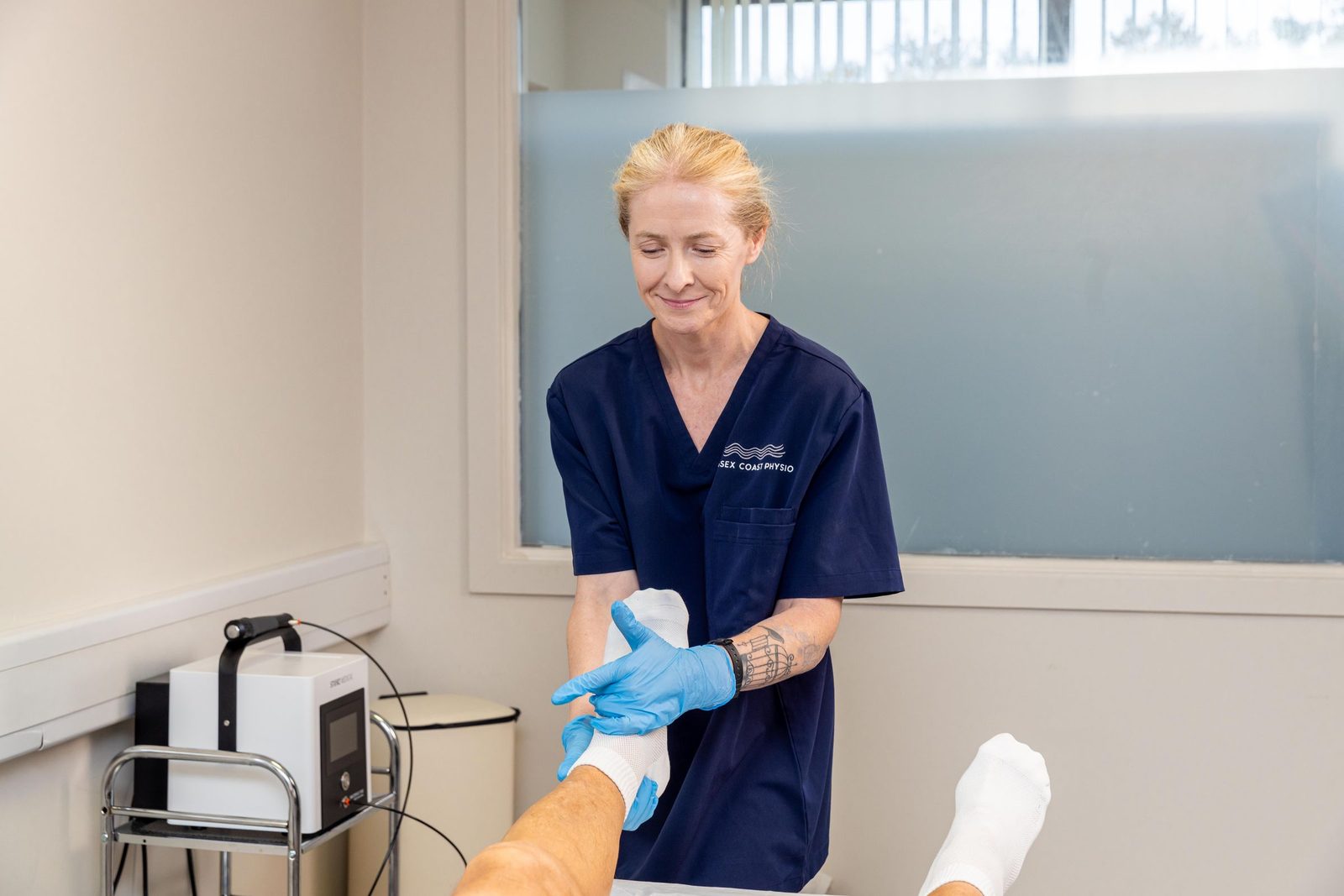
First we find what is causing the pain. We watch you walk, test the foot and ankle joints, calf and tendons, and ask what has changed recently, such as new shoes, a walking holiday or a garden project. Ultrasound at the clinic can show a tendon directly.
Treatment combines hands-on work to ease pain and free stiff joints with a loading programme for the tendons and muscles. Calf and foot strength is the part most people skip and usually the part that makes the difference, with exercises that take minutes rather than hours.
We also advise on footwear, temporary insoles, how far to walk for now and managing stairs while things settle. For a stubborn tendon or heel problem, shockwave therapy is available here.
The aim is a foot and ankle you trust on the seafront, on a slope and in the dark, because confidence walking protects your independence.
Your first visit
What to expect.
- Your first appointment is 30 minutes, with time to assess your walking as well as the painful area
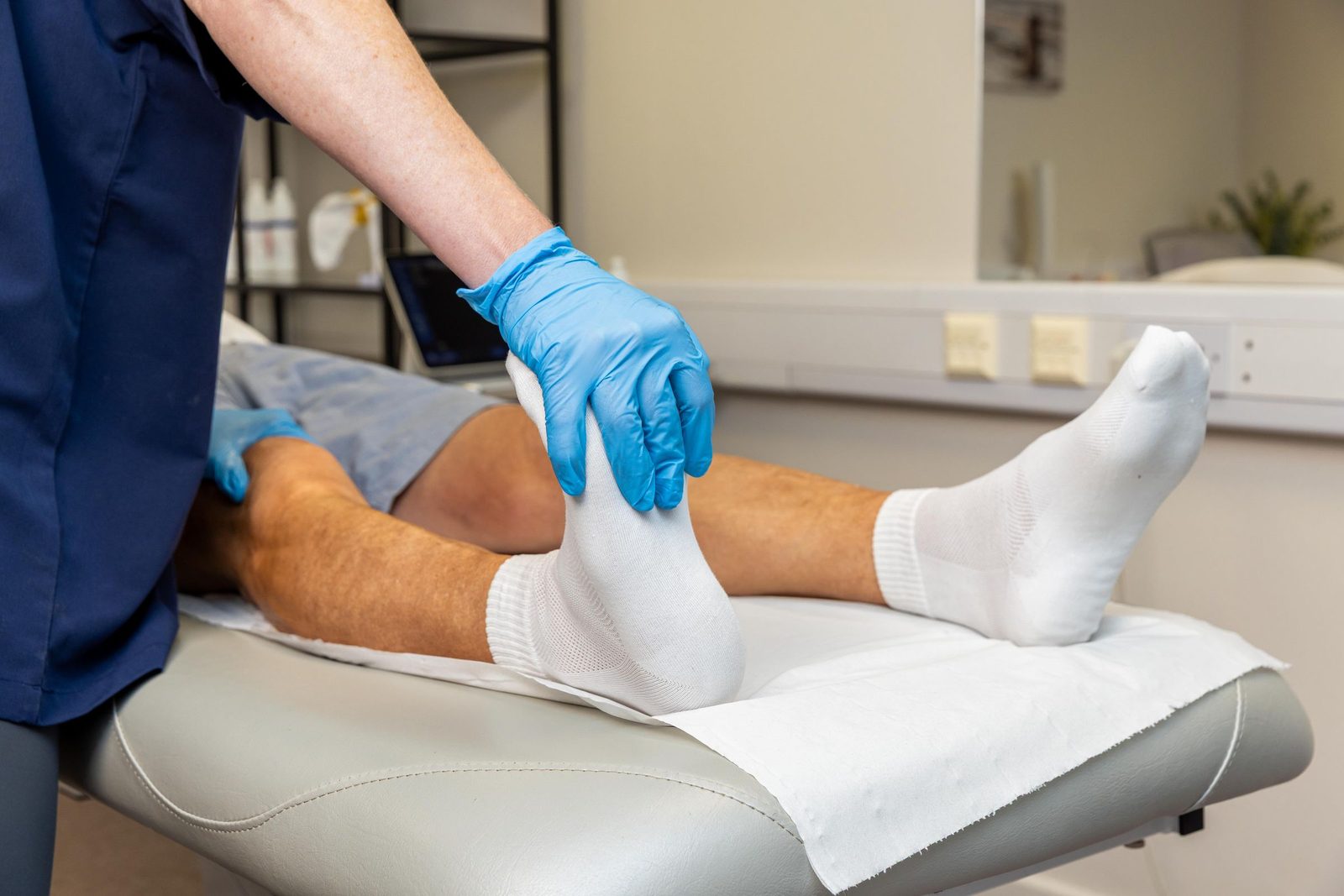
- We examine the foot, ankle and calf and explain in plain terms what we have found
- You go away with a starting plan, your first exercises and clear advice on footwear and walking
- Bring the shoes you wear most, including any walking or sports shoes, and any scan reports you have
FAQs
Common questions.
Should I rest completely until the pain goes?
Usually not. Total rest makes tendons and ligaments less tolerant. Instead, ease off what flares it, keep moving at a level the tissue can handle and build back up steadily.
Do I need expensive orthotics?
Sometimes an insole helps, particularly in the early stages, but it is a support rather than a solution and most people do not need a custom pair. We would rather get your strength and walking pattern right first, then decide whether anything extra is needed.
My ankle sprain was months ago and it still feels unreliable. Is that normal?
It is common and treatable. After a sprain, the ankle’s position sense and stabilising muscles often do not recover on their own. Targeted balance and strength work usually restores confidence and reduces the risk of turning it again.
How long does heel or Achilles pain take to settle?
Usually months rather than weeks, and progress tends to go up and down. We will tell you what good progress looks like at each stage.
Related
People with this often ask about these too.
Ready when you are.
Call or WhatsApp us on 01702 965 509 and we will find a time that suits you.