
Conditions we treat
Hip bursitis and hip impingement
Outer hip pain that stops you lying on that side and a pinching groin ache when you sit low are different problems with different answers. Getting the diagnosis right is most of the work.
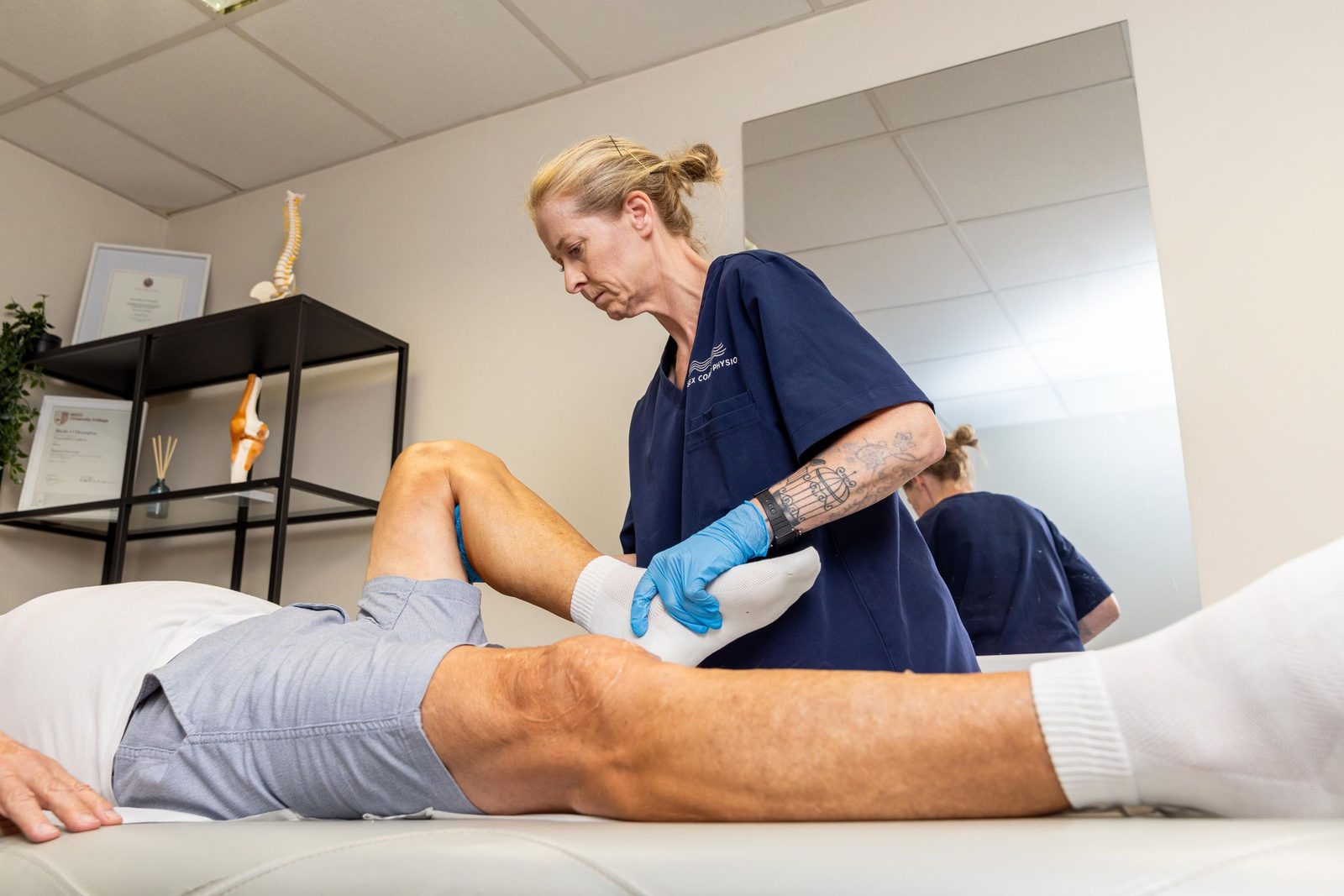
What it is
Understanding hip bursitis and impingement.
Pain over the bony point on the outside of the hip is often called bursitis, but the more accurate term is greater trochanteric pain syndrome, because the gluteal tendons there are usually the main problem. It is most common in women from their fifties and can be persistent.
Hip impingement (femoroacetabular impingement) is different. The ball and socket meet earlier than they should when the hip bends and turns, irritating the joint and its cartilage rim. It is more common in younger, active adults and causes groin pain when sitting low, getting in and out of the car or twisting.
Both are often confused with hip arthritis or pain referred from the back, but a proper examination usually tells them apart.
What people notice
- Pain over the bony point on the outside of the hip, sometimes running down the outer thigh
- Being unable to lie on that side at night, or to sleep with your knees together
- Pain when standing on one leg, on stairs, or after walking
- A deep pinching ache in the groin when sitting in a low chair or car seat
- Discomfort putting on socks and shoes or crossing your legs
- Catching or stiffness in the groin when turning on the leg
- Tenderness when you press the outside of the hip
How we help
What treatment actually involves.
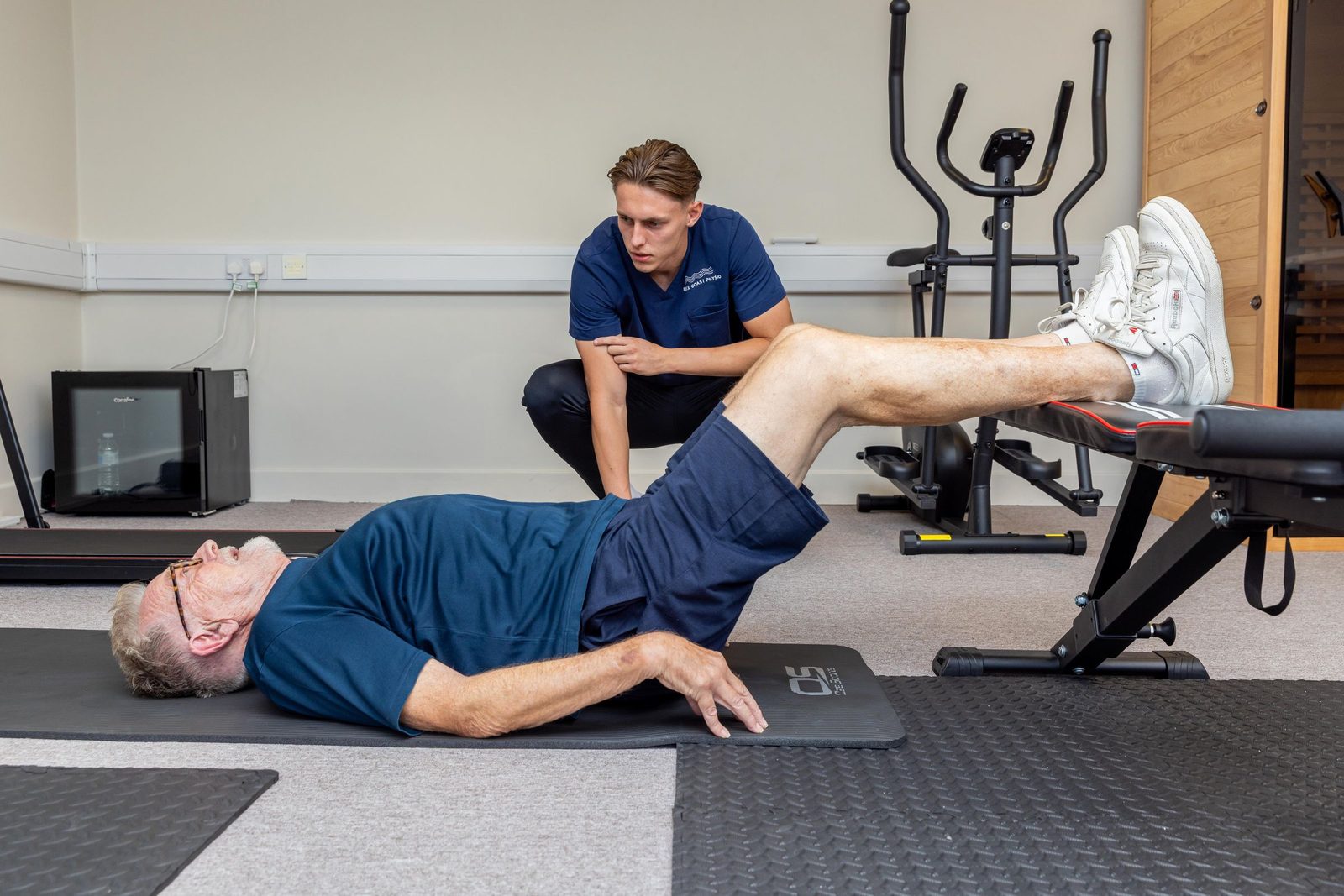
The assessment is the most valuable part. We test the positions that provoke each problem, check your lower back and pelvis, test strength on one leg, and watch how you walk and rise from a chair. That usually makes the diagnosis clear.
For outer hip pain, we reduce the positions that compress the tendons and progressively strengthen the muscles on the outside of the hip. Simple changes to how you sit, stand, sleep and cross your legs make a surprising difference.
For impingement, we improve how the hip moves and controls load, with mobility work in a comfortable range, hip and trunk strength, and changes to seating, driving position and getting in and out of the car.
Both usually respond well, over weeks to months rather than days. If pain is not settling, we will discuss imaging, areferral to your GP or a specialist opinion.
Your first visit
What to expect.
- Your first appointment is 30 minutes, covering the hip, pelvis and lower back
- Specific testing to tell outer hip tendon pain, hip impingement, arthritis and referred back pain apart
- A clear explanation of which it is and why it has happened
- A starting programme plus practical advice for sitting, standing, sleeping and driving
FAQs
Common questions.
Is bursitis the right name for pain on the outside of my hip?
It is the familiar name, but usually the gluteal tendons are the main source of pain rather than the bursa. That matters, because tendons respond to graded loading, while calming the bursa alone rarely lasts.
Why can I not sleep on that side?
Lying on that side compresses the tendons against the bony point, and lying on the other side with the top knee dropped forwards does much the same. A pillow between the knees usually helps, and we will show you how to set it up.
Will stretching my hip help?
For outer hip pain, many popular stretches make it worse by compressing tissue that is already irritated, so strength work is usually what helps. For impingement, some mobility work is useful within a range the joint tolerates.
Do I need a scan or an injection?
Usually not to begin with. These conditions can normally be diagnosed on examination, and treatment starts the same way regardless. If you are not progressing, imaging or an injection may have a place.
Related
People with this often ask about these too.
Ready when you are.
Call or WhatsApp us on 01702 965 509 and we will find a time that suits you.