
Conditions we treat
Pelvic floor problems
Pelvic floor problems are common, affect men as well as women, and are rarely something you just have to live with. Assessment and treatment are practical, private and focused on what you want to get back to.
What it is
Understanding pelvic floor conditions.
The pelvic floor is a layer of muscle across the base of the pelvis. It supports the bladder, bowel and, in women, the womb, helps control when you pass urine or open your bowels, and supports your trunk. Like any muscle group, it can become weak, overactive, tight or poorly coordinated.
Problems can follow childbirth, menopause, prostate surgery, constipation and straining, a chronic cough, heavy lifting, abdominal or pelvic surgery, or age-related muscle loss. Men are affected too, most often with bladder control after prostate treatment or pelvic pain, and are less likely to seek help because they do not realise physiotherapy is an option.
People stop going to exercise classes, plan routes around toilets, avoid lifting grandchildren or turn down trips out. Reversing that narrowing of life is a large part of what treatment is for.
What people notice
- Leaking urine when you cough, sneeze, laugh, lift or exercise
- Sudden urgency, or needing the toilet more often than you would like
- Difficulty fully emptying the bladder or bowel
- A feeling of heaviness, dragging or a bulge in the vagina or pelvis
- Bowel control problems, including urgency or leakage of wind or stool
- Pain in the pelvis, lower abdomen, perineum or during intercourse
- Loss of confidence in exercise, travel or social plans because of symptoms
How we help
What treatment actually involves.
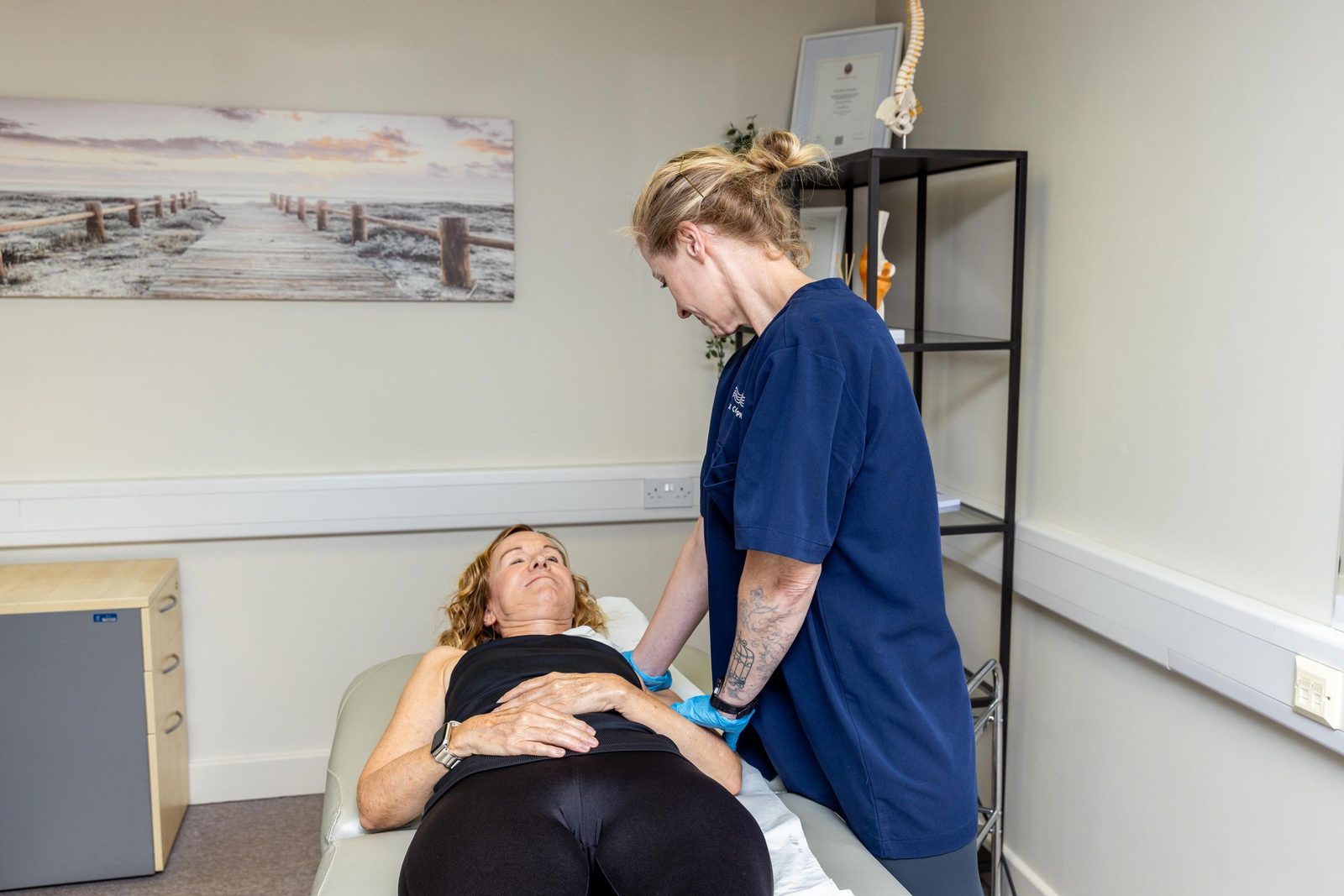
The first appointment is mostly conversation, in a private room at your pace. We ask about bladder and bowel habits, symptoms, general health and what the problem stops you doing. These are routine questions, and there is nothing we have not heard before.
Assessment is then tailored to you. A great deal can be assessed from the outside by looking at how you breathe, brace, lift and move, and by testing the muscles around the hips, abdomen and back. Any examination is explained fully in advance, the reasons for it are made clear, it only goes ahead with your consent and you can decline or stop at any point without it affecting your care.
A weak pelvic floor needs graded strengthening, progressed over time, which is why generic advice to do pelvic floor exercises often fails. An overactive or tight pelvic floor needs the opposite: learning to release and relax. We also cover bladder and bowel habits, fluid and fibre, straining, breathing and how you lift.
General strength work can be built into the same plan. If you need a consultant, a continence service or another specialist, we will help you take that step.
Your first visit
What to expect.
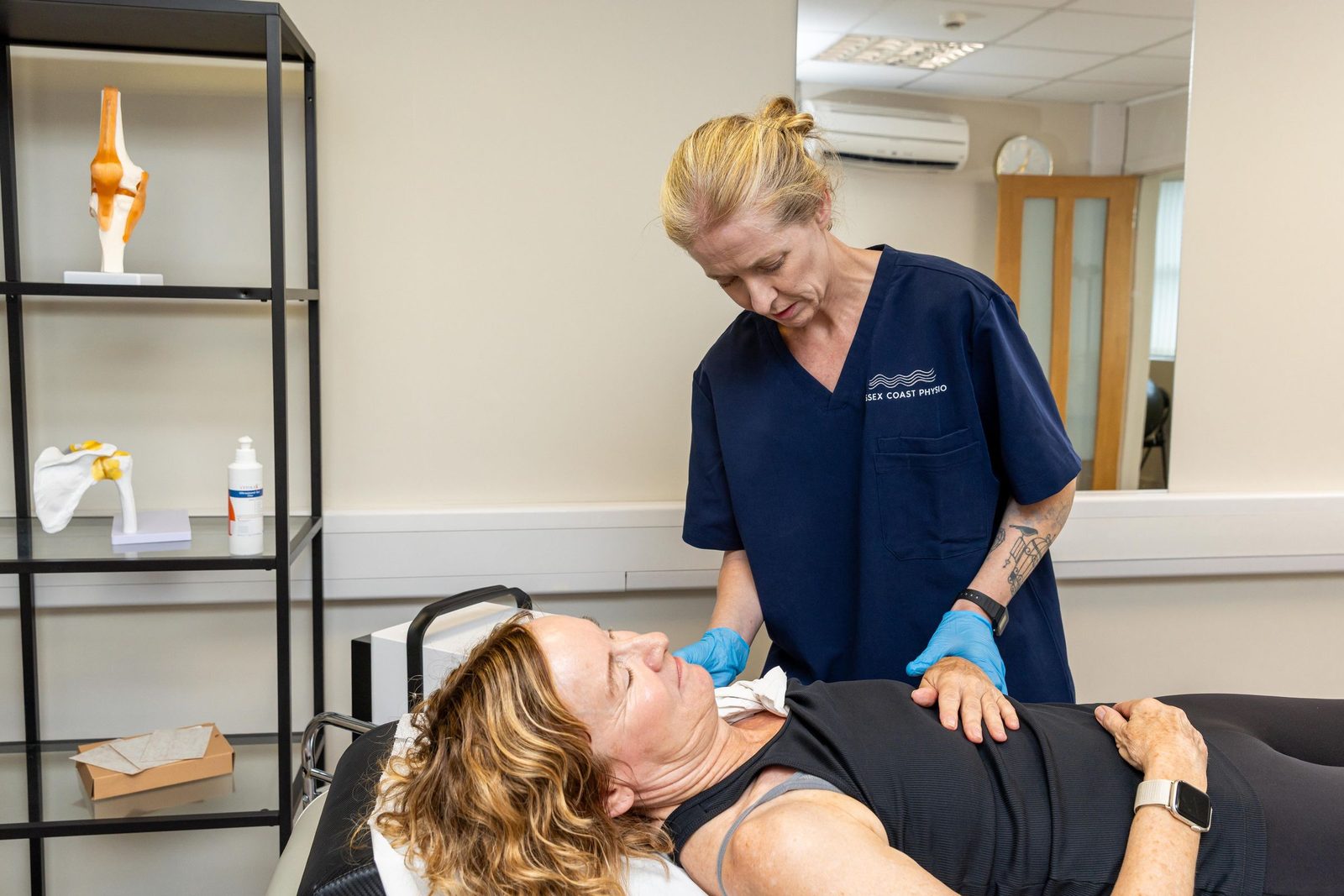
- Your first appointment is 30 minutes, in a private treatment room, or 60 minutes with a Platinum session if you would like more time to talk
- Expect detailed questions about bladder, bowel and daily activity, asked in plain clinical language
- Nothing is examined without your permission, and much can be assessed without an internal examination
- You leave with an explanation of what is happening and a practical plan to start on
FAQs
Common questions.
Is this only for women who have had children?
No. We see women who have never been pregnant, women well past the menopause, and men, particularly after prostate surgery or with pelvic pain.
Will I need an internal examination?
Not necessarily. It can be the most accurate assessment, but it is never automatic and never a condition of treatment. We explain why it might help, you decide, and if you would rather not, we assess and treat in other ways.
I have been doing pelvic floor exercises for years and nothing has changed. Why?
Often the technique is not quite right, the muscle needs to relax rather than squeeze, or the exercises never progress. An assessment shows which applies, and that changes the outcome more than doing more of the same.
Is leaking just part of getting older?
It becomes more common with age, but common is not normal or untreatable. Many people improve meaningfully with the right programme, and very few should accept it without a proper assessment.
Can you help with male pelvic problems?
Yes. Men have a pelvic floor too, and it causes the same problems: leaking, urgency, pain in the pelvis, groin or tailbone, and problems after prostate surgery. The approach is the same, and nothing happens that you have not agreed to.
Related
People with this often ask about these too.
Ready when you are.
Call or WhatsApp us on 01702 965 509 and we will find a time that suits you.