
Conditions we treat
Living well with arthritis, including hip and knee osteoarthritis
Arthritis does not have to mean giving things up. Most people with hip or knee osteoarthritis can keep walking, gardening and getting out of a chair comfortably, with the right mix of strength work, movement and sensible pacing.
What it is
Understanding arthritis, including hip and knee osteoarthritis.
Osteoarthritis is the most common form of arthritis. Over time the cartilage lining a joint thins and the bone beneath changes shape a little. It is very common from our forties, most often in the hips, knees, hands and base of the thumb.
It is often called wear and tear, which is not quite fair, because joints respond to how they are used. X-ray changes are common in people with no pain, and what a scan shows often does not match what you feel.
Inflammatory types, such as rheumatoid and psoriatic arthritis, are managed by a rheumatologist with medication. Physiotherapy still helps keep those joints moving and muscles strong.
What people notice
- Stiffness first thing in the morning that eases within about half an hour
- Aching in the hip, groin, thigh or knee after standing or walking
- Pain and hesitation getting out of a chair, in and out of the car, or on stairs
- A grating, clicking or crunching feeling in the joint
- Swelling or warmth around the knee after a busier day
- Good days and bad days, with flare-ups that settle again
- Gradually doing less because you are not sure the joint will hold up
How we help
What treatment actually involves.
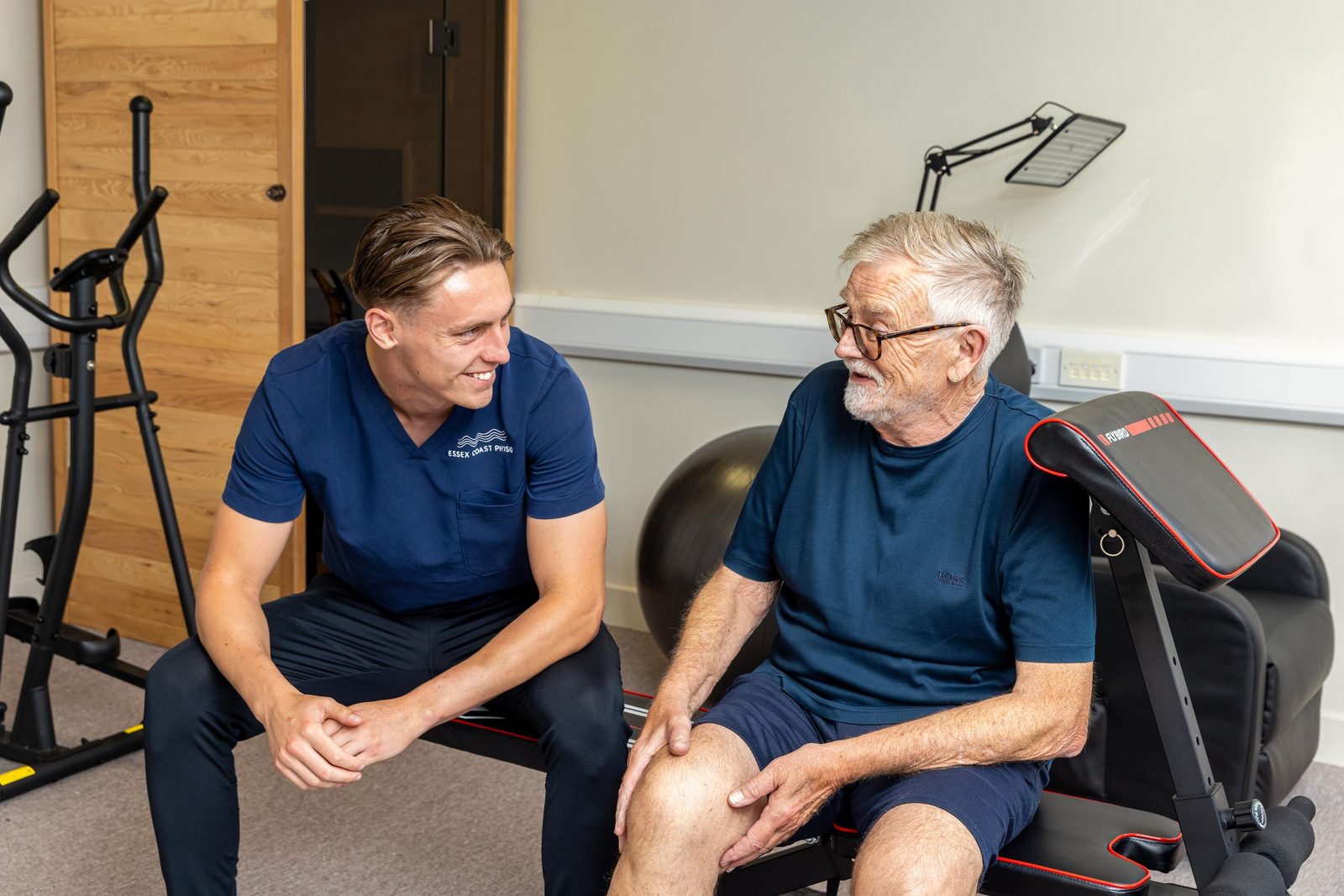
We start by working out what is limiting you: how the pain behaves through the day, how the joint moves, how strong the surrounding muscles are, and how you manage walking, stairs, chairs and the car. We also ask what you want to get back to.
Strengthening the muscles that support the joint, built up gradually and kept up, is the single most useful treatment for hip and knee osteoarthritis. We tailor the programme to your life and show you each exercise in our rehab gym. Progress comes over weeks and months.
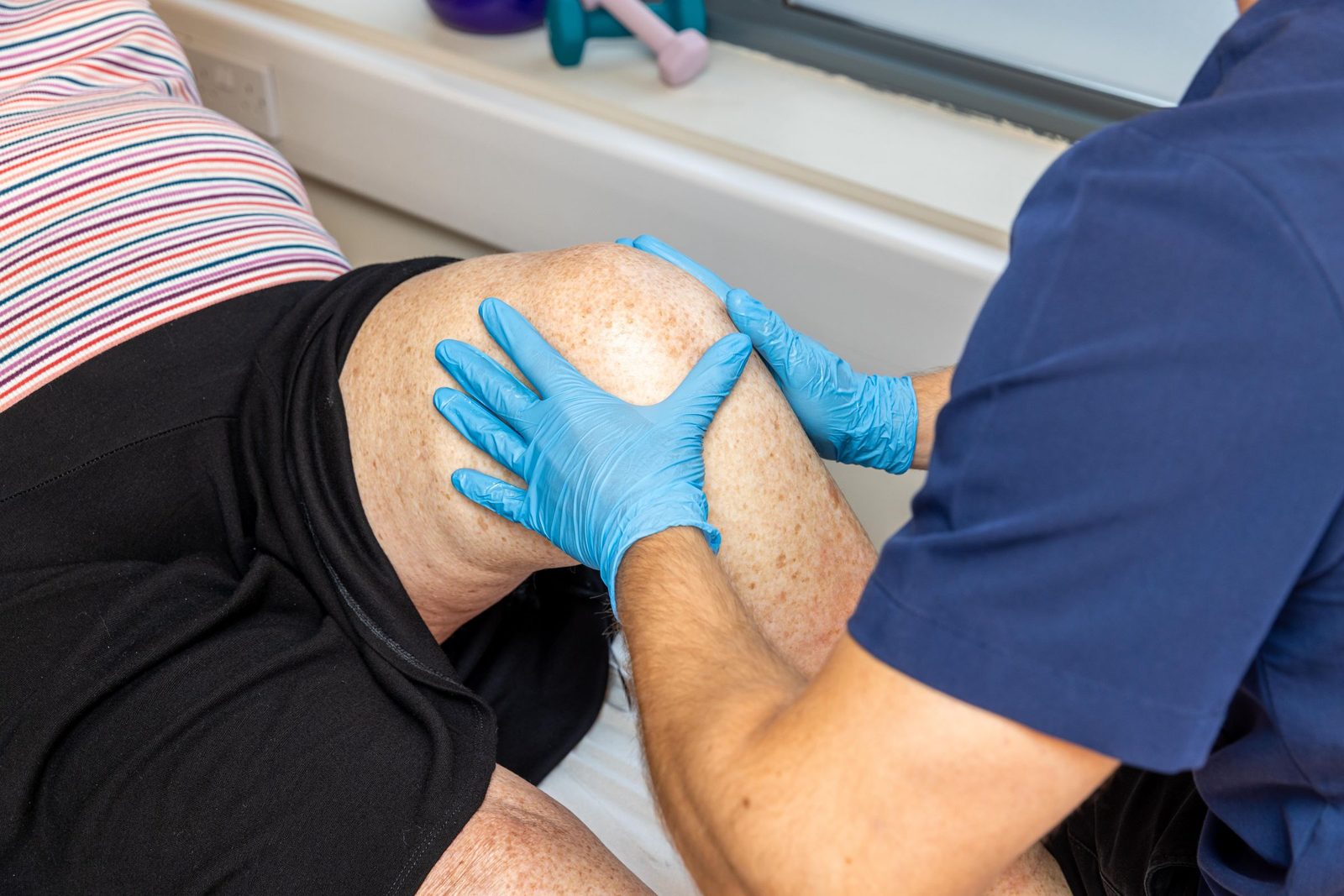
Hands-on treatment and mobility work can take the edge off a stiff, irritable joint and make exercise easier. We also cover pacing, footwear, walking aids and how to handle a flare-up without losing ground.
Physiotherapy cannot reverse joint changes, but it very often reduces pain, improves how far you can walk and keeps you independent for longer. If imaging, an injection or an orthopaedic opinion would help, we will say so.
Your first visit
What to expect.
- Your first appointment is 30 minutes, or 60 minutes with a Platinum session if you would like more time to talk and be assessed without rushing
- We go through your history, how the pain affects your day, and what you want to be able to do again
- A hands-on assessment of the joint, your strength, your balance and how you move
- You leave with a clear explanation, a starting plan you can manage at home, and an honest view of what to expect
FAQs
Common questions.
Will exercise wear my joints out faster?
No. The evidence points the other way: joints are nourished by movement, and strong muscles act as shock absorbers. What matters is the dose, which is why we build the programme gradually.
Some discomfort during exercise is normal, but how much is too much?
A mild ache during and after exercise is fine. As a rule, the joint should settle within about 24 hours and not be worse the next morning. If it is, the amount needs adjusting rather than the exercise.
Do I need an X-ray or a scan?
Usually not. Hip and knee osteoarthritis can normally be diagnosed from your history and an examination. Imaging helps if we suspect something else or surgery is being considered.
Does this mean I will end up needing a joint replacement?
Not necessarily. Many people manage arthritic joints for decades without surgery. If you do need one, arriving stronger makes recovery easier, so the work is never wasted.
Related
People with this often ask about these too.
Ready when you are.
Call or WhatsApp us on 01702 965 509 and we will find a time that suits you.