
Conditions we treat
Tennis elbow and golfer’s elbow
You do not need to play tennis or golf to get either. They are elbow tendon problems, usually from everyday gripping and lifting, and they respond to patient, progressive loading rather than rest.
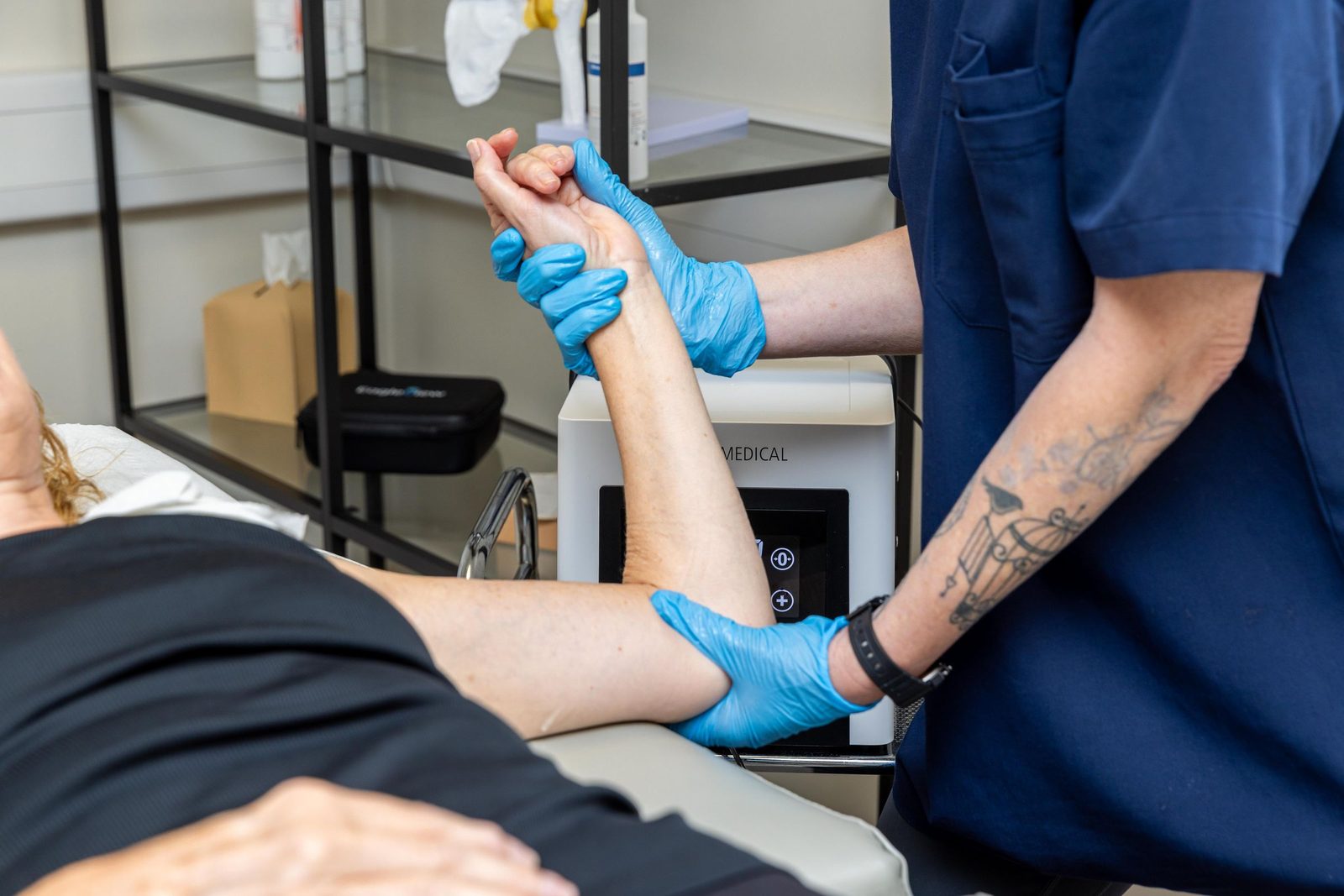
What it is
Understanding tennis and golfer’s elbow.
Tennis elbow affects the tendons on the outside of the elbow, golfer’s elbow those on the inside. Both are tendinopathies: the tendon has been loaded more than it could cope with and has become painful.
The usual trigger is a change in activity, such as decorating, a new gardening project, heavy carrying, a house move or picking up a racquet after years off. Pain often appears a day or two later, so the link is easy to miss.
They make ordinary things hard, from kettles and jars to shaking hands, and recovery is usually measured in months. The good news is that most settle with the right programme, without injections or surgery.
What people notice
- Pain on the outside or inside of the elbow, sometimes spreading into the forearm
- Pain and weakness when gripping, particularly with the arm straight
- Struggling to lift a kettle, a mug or a shopping bag
- Tenderness on a specific spot at the elbow when you press it
- Pain when turning a door handle, a key or a tap
- Aching in the evening or overnight after a busy day with the hands
- A weaker grip than usual, or dropping things
How we help
What treatment actually involves.
First we confirm the tendon is the problem. Elbow pain can also come from the neck, an irritated nerve or the joint itself, and a loading programme aimed at the wrong tissue will not work.
Then we find what set it off and how to modify it rather than stop altogether, such as how you carry bags, hold tools or share tasks between both hands.
The core of treatment is graded strengthening for the forearm, wrist and often the shoulder, built up over weeks without flaring you. Soft tissue work, bracing and taping can ease pain early on.
For long-standing tendon pain that has not responded to loading, shockwave therapy is available here as an addition to the exercise, not a substitute for it.
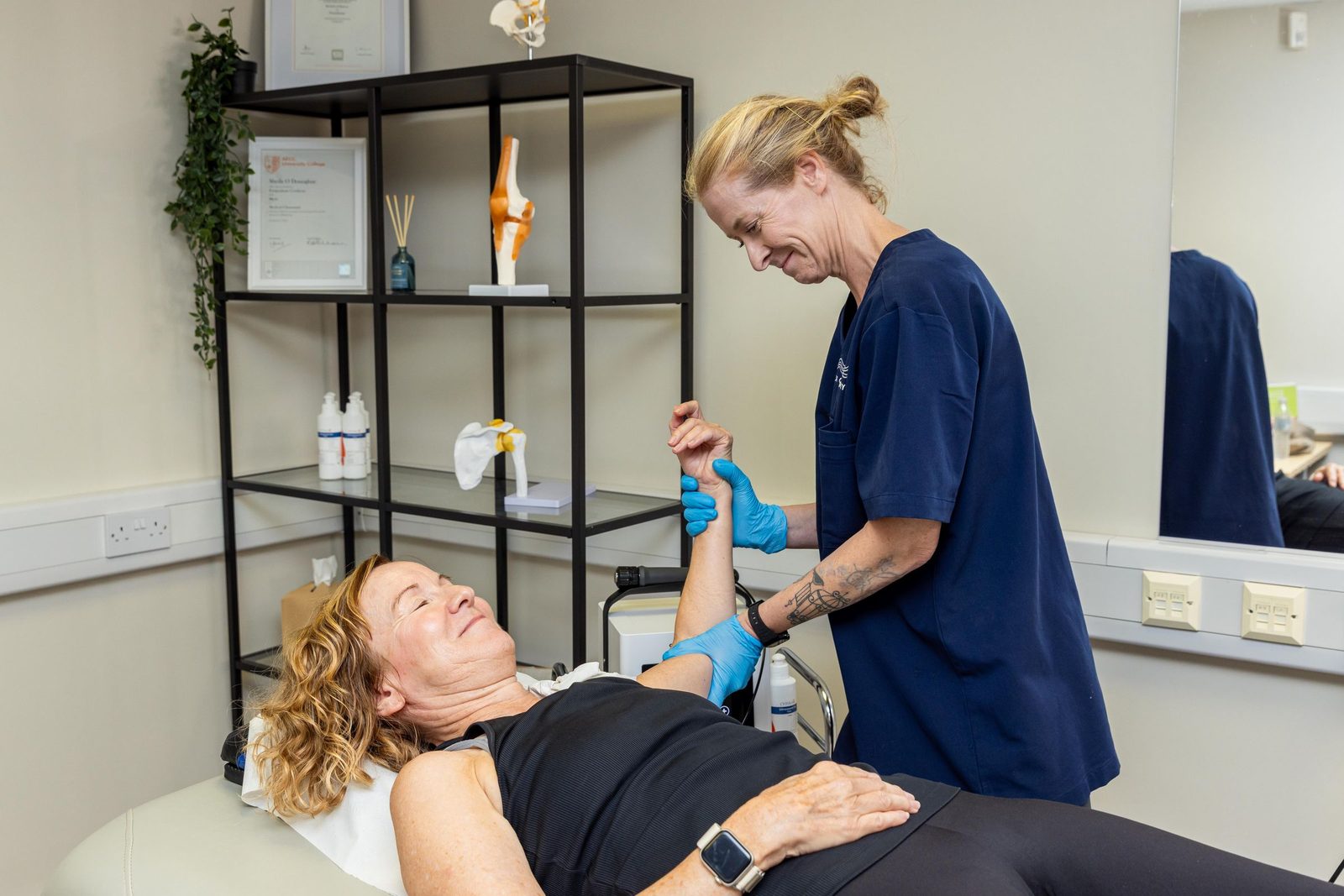
Your first visit
What to expect.
- Your first appointment is 30 minutes, including assessment of the elbow, wrist, shoulder and neck
- Grip and strength testing so we have a baseline to measure progress against
- A plain explanation of why it happened, which is usually a change in load rather than anything you did wrong
- A starting programme and practical advice on modifying the activities that are keeping it going
FAQs
Common questions.
Should I rest it completely until it settles?
No. Complete rest lets the tendon lose capacity, so the pain returns when you go back to normal use. Instead, reduce the aggravating load for a while and load the tendon progressively.
Do those elbow straps and braces work?
They help some people in the short term by changing how load passes through the tendon, which can make a working day or a gardening session more manageable. They support treatment but do not replace a strengthening programme.
How long will this take?
Most elbow tendon problems take a few months to settle, and long-standing ones longer. Improvement is gradual, and we will give you clear markers so you can tell it is heading the right way.
What about a steroid injection?
An injection can reduce pain quickly, but evidence on tennis elbow shows people who have one often do worse at a year than those who exercise. We suggest loading first, and if pain stops you doing anything at all, discussing an injection with your GP alongside rehabilitation.
Related
People with this often ask about these too.
Ready when you are.
Call or WhatsApp us on 01702 965 509 and we will find a time that suits you.